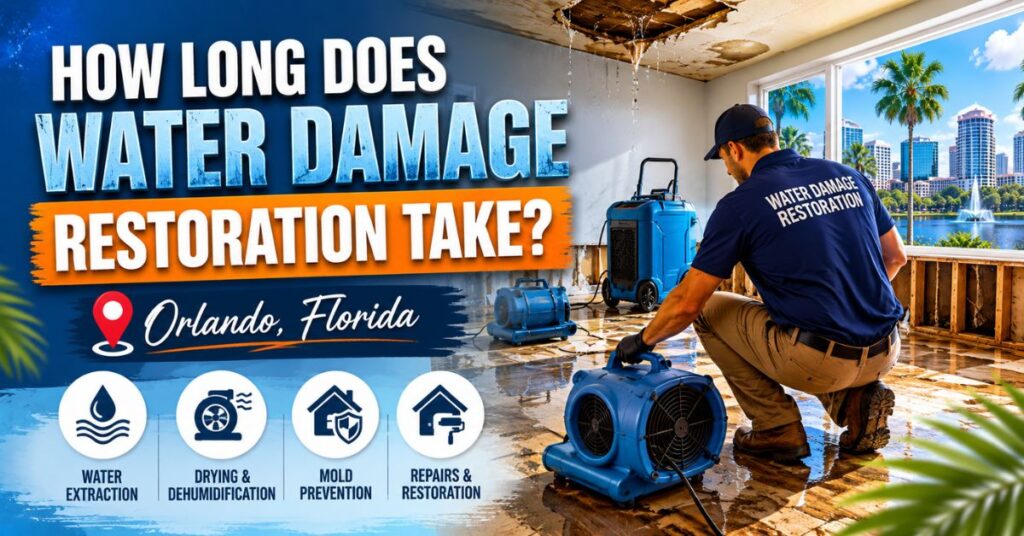
How Long Does Water Damage Restoration Take? A Complete Orlando Homeowner’s Guide
Water damage is one of those problems that can turn your day upside down in a matter of minutes. One moment everything looks normal. The next, you discover water on the floor, a ceiling stain or a leak that has already spread through part of your home. After the initial shock, most homeowners ask me the same two questions: How long is this going to take? When can my home get back to normal? The honest answer is that every situation is different. A small leak that is discovered early may only take a few days to dry and repair. A larger loss involving multiple rooms, structural damage, or mold can take several weeks. Over the past 37 years, I have helped homeowners throughout Orlando deal with every type of water damage imaginable, from simple AC condensate leaks to major storm-related losses. One thing I have learned is that the restoration timeline depends on how quickly the problem is discovered and how much moisture has spread through the home. “In my experience, the biggest mistake homeowners make is assuming the job is finished when the water is gone. Proper drying takes time, and rushing the process often leads to bigger problems later.” — Philip White, Owner, Philip White Painting and Restoration LLC In this guide, I will explain how long water damage restoration typically takes, what factors affect the timeline, and what you can expect during each stage of the restoration process. Quick Answer: How Long Does Water Damage Restoration Take? Most water damage restoration projects take anywhere from a few days to several weeks, depending on the severity of the damage. Damage Type Typical Timeline Small water leak 3–5 days Moderate water damage 5–10 days Major water damage 2–6 weeks Mold remediation projects 1–3 weeks For most Orlando homeowners, the drying process typically takes between 3 and 7 days. If repairs such as drywall replacement, flooring installation, or painting are needed, the overall project may take longer. The sooner water damage is addressed, the faster the restoration process usually goes. What Happens During Water Damage Restoration? Many homeowners hear the term “water damage restoration” but are not exactly sure what it involves. The process is much more than simply removing visible water. Proper restoration focuses on finding hidden moisture, drying building materials, preventing mold, and restoring the home to its pre-loss condition. 1) Inspection The first step is a thorough inspection. We identify the source of the water, determine how far the moisture has spread, and use professional moisture detection equipment to locate water that may be hidden behind walls, under flooring, or inside ceilings. 2) Water Extraction Once the inspection is complete, standing water is removed using professional extraction equipment. Removing water quickly helps reduce further damage and speeds up the drying process. 3) Structural Drying After the visible water is gone, the real drying process begins. Industrial air movers and dehumidifiers are placed throughout the affected areas to remove moisture trapped inside drywall, wood, flooring, and other materials. This stage is critical because hidden moisture can lead to mold growth if it is not properly addressed. 4) Repairs Once moisture levels return to normal, damaged materials can be repaired or replaced. This may include drywall, insulation, flooring, trim, cabinetry, or ceiling repairs. 5) Final Restoration The final step is restoring your home to its pre-loss condition. Depending on the extent of the damage, this may involve painting, finishing work, and rebuilding damaged areas so your home looks and functions like it did before the loss occurred. Day-by-Day Water Damage Restoration Timeline One of the biggest questions homeowners have is what actually happens each day during the restoration process. While every project is different, most jobs follow a similar timeline. Day 1: Inspection and Water Extraction The first day focuses on identifying the source of the water, inspecting the affected areas, and removing standing water. Moisture readings are taken, and drying equipment is installed to begin the restoration process as quickly as possible. Days 2–4: Active Drying During this stage, air movers and dehumidifiers run continuously. Moisture levels are monitored daily to ensure building materials are drying properly. This is often the longest part of the process because hidden moisture takes time to remove safely. Days 5–7: Final Moisture Testing Once materials appear dry, additional moisture testing is performed. The goal is to confirm that walls, flooring, and other building materials have reached acceptable moisture levels. When drying is complete, the equipment can usually be removed. Week 2 and Beyond: Repairs and Restoration If repairs are needed, this stage may include drywall replacement, painting, flooring repairs, trim installation, and other restoration work. Small projects may be completed quickly, while larger losses can take several additional weeks depending on the scope of repairs. Water Damage Restoration Timeline by Type of Water Damage Not all water damage situations are the same. The source of the water often plays a major role in determining how long the restoration process will take. A small AC leak may be resolved within a few days, while flood damage can take several weeks to fully restore. 1) AC Leak AC condensate leaks are one of the most common causes of water damage in Orlando homes. If the leak is discovered early, drying and minor repairs can often be completed quickly. Typical timeline: 3–5 days 2) Ceiling Leak Ceiling leaks are often caused by roof damage, plumbing issues, or AC problems in the attic. The timeline depends on how much moisture has spread into the drywall and insulation. Typical timeline: 5–10 days 3) Burst Pipe A burst pipe can release a large amount of water in a short period of time. Multiple rooms may be affected, and extensive drying may be required. Typical timeline: 1–3 weeks 4) Storm Damage Heavy rain and severe storms can allow water to enter through roofs, windows, and exterior walls. These projects often involve both drying and reconstruction. Typical timeline: 2–4 weeks 5) Flood Damage Flood damage is usually the