
How to File a Water Damage Insurance Claim in Florida (Step by Step)

Water damage just happened in your home. You are stressed, things are wet, and you are not sure what to do first. One of the most important things you need to handle is your insurance claim. And how you handle it in the first few hours can make a big difference in what gets covered. This guide walks you through exactly how to file a water damage insurance claim in Florida, what your policy likely covers, the mistakes that get claims denied, and how to get the best possible outcome. Step 1: Stop the Water Source Immediately Before you do anything else, stop more water from coming in. Turn off the main water valve if a pipe bursts. Turn off your AC if the condensate drain is overflowing. If it is roof damage from a storm, cover the opening with a tarp if it is safe to do so. Insurance companies expect you to take reasonable steps to prevent additional damage after an incident. If you do nothing and the damage gets worse, they may reduce your payout or deny part of the claim on the grounds that you failed to mitigate. Step 2: Document Everything Before You Clean Up This is the most important step most homeowners skip. Before you move anything, mop anything, or throw anything away, take photos and videos of everything. This documentation is your evidence. The more thorough it is, the stronger your claim. Save everything to cloud storage so you cannot lose it. Step 3: Call Your Insurance Company Right Away Most Florida homeowner’s insurance policies require you to report damage promptly. Do not wait a few days to see how bad it gets. Call your insurer the same day or the next morning at the latest. When you call, have your policy number ready and be prepared to describe the source of the water, when you discovered it, and what areas of the home are affected. Ask what documentation they need and what the next steps are in their process. Your insurer will assign a claims adjuster to your case. This person works for the insurance company, not for you. Keep that in mind throughout the process. Step 4: Call a Water Damage Restoration Company Do not wait for the adjuster to visit before starting restoration. Standing water causes more damage every hour it sits. Mold can start growing within 24 to 48 hours in Florida’s humidity. A professional restoration company like Philip White Painting LLC can begin water extraction and drying immediately. We also document all damage with moisture readings, photos, and detailed reports that support your insurance claim. Important: keep all receipts and invoices from restoration work. These are reimbursable expenses under most policies. Step 5: Understand What Your Policy Covers Florida homeowner’s insurance policies typically cover water damage that is sudden and accidental. Here is what is usually covered and what is usually not: Usually covered: Usually NOT covered: If you are not sure what your policy covers, read your declarations page carefully or ask your agent to walk you through it. Step 6: Meet With the Insurance Adjuster The adjuster will visit your home to assess the damage. Here is how to handle this meeting: If you feel the adjuster undervalued the damage, you have options. You can request a re-inspection, hire a public adjuster who works on your behalf, or consult a property damage attorney. Step 7: Review the Settlement Offer Carefully Once the adjuster submits their report, your insurance company will issue a settlement offer. Read it carefully before you accept. Check that the offer covers the actual cost of repairs, not just a depreciated value of materials. If your policy includes replacement cost value coverage, you are entitled to the full cost of replacing damaged items with new ones of similar quality. Do not sign anything or accept a settlement until you are sure it covers the full scope of the work needed. Once you accept, it is very difficult to go back for more. Common Mistakes That Get Water Damage Claims Denied in Florida These are the most common reasons Florida homeowners see their water damage claims reduced or denied: 1) Waiting too long to report the damage. Most policies require prompt reporting. Delays give insurers grounds to argue the damage worsened due to neglect. 2) Not taking photos before cleanup. Without documentation, the adjuster only sees what is left. You lose your evidence. 3) Throwing away damaged items before the adjuster visits. Keep damaged belongings until the adjuster has seen them or you have permission to dispose of them. 4) Assuming flooding is covered. Standard homeowner’s insurance does not cover flood damage. Many Florida homeowners are shocked to learn this after a hurricane. 5) Trying to do repairs yourself before the claim is settled. DIY repairs can complicate your claim. Let professionals document and handle the restoration. How Philip White Painting LLC Helps With Insurance Claims in Orlando Philip White Painting LLC has worked with hundreds of Orlando homeowners navigating the insurance claims process after water damage. Here is how we help: Our goal is to make sure your home is fully restored and that the insurance process is as smooth as possible for you. Need Help With Water Damage in Orlando? Philip White Painting LLC provides 24/7 emergency water damage restoration in Orlando, FL. We handle water removal, drying, repairs, and insurance claims. Call Now: (407) 860-5846 or Request a Free Estimate! Frequently Asked Questions 1) How long do I have to file a water damage insurance claim in Florida? Florida law generally requires claims to be filed within a reasonable time. However, most policies have specific time limits, often 14 days to report and up to one year to file formally. Check your policy and report as soon as possible. 2) What if my insurance company denies my water damage claim? You can appeal the decision, request a re-inspection, or hire a public adjuster or attorney who specializes in property damage
7 Warning Signs of Hidden Water Damage in Your Orlando Home
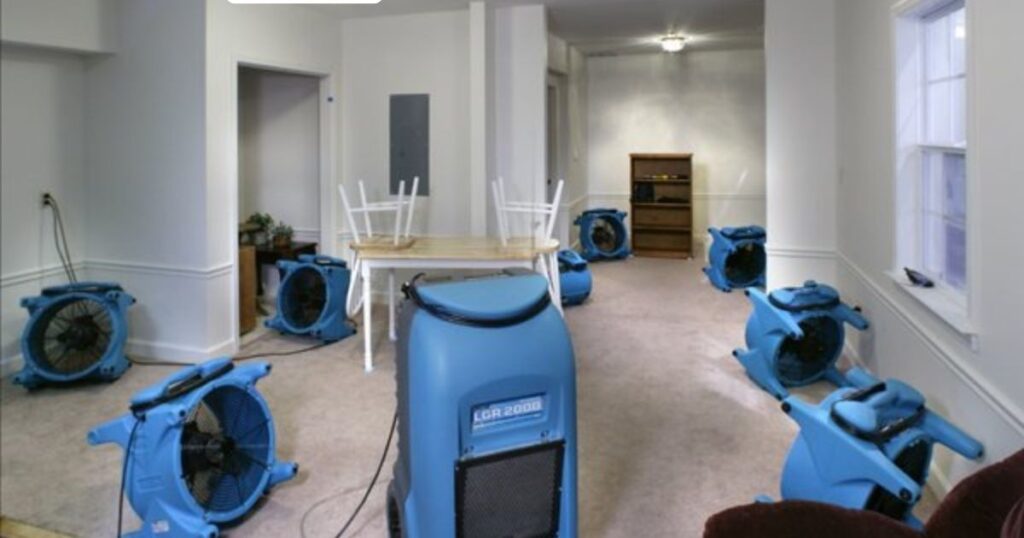
Water damage is sneaky. You might have a slow leak behind your walls or under your floors right now and have no idea. By the time it becomes obvious, mold may have already started growing and the repair bill has grown right along with it. In Orlando, where humidity is high and AC systems run year-round, hidden water damage is more common than most homeowners realize. The good news is there are signs. You just have to know what to look for. Here are 7 warning signs that your home may have hidden water damage, and what to do if you spot them. Sign 1: A Musty Smell That Just Will Not Go Away You clean the house. You take out the trash. You open the windows. But that musty, damp smell keeps coming back. This is one of the most reliable signs of hidden water damage. Mold and mildew produce a distinct earthy, musty odor. If you can smell it but you cannot see any visible mold, it is almost certainly growing somewhere out of sight. Common hiding spots include inside walls near plumbing, under flooring, inside cabinets under sinks, and in attic insulation near the roof or AC unit. In Orlando homes, this smell often comes from a slow AC condensate leak or a small pipe drip that has been going on for weeks without anyone noticing. Sign 2: Discoloration or Staining on Walls and Ceilings Yellow, brown, or rust-colored rings or patches on your walls or ceiling are a classic sign that water has soaked through at some point. These stains do not always mean there is active leaking right now. But they do mean water got in at some point, and if the source was not fixed, it will likely happen again. Pay close attention to areas directly below bathrooms, kitchens, or your air handler. Stains on exterior walls can indicate roof leaks or problems with your window sealing. Do not just paint over water stains. The underlying moisture issue needs to be identified and fixed first, otherwise the stain will keep coming back through the fresh paint. Sign 3: Paint or Wallpaper That Is Bubbling or Peeling When moisture gets behind paint or wallpaper, it pushes the surface away from the wall. You will see bubbles, blisters, or sections that are peeling away. This is different from old paint that is just worn out. Water-related peeling tends to appear in isolated patches and often feels slightly soft or spongy to the touch. This is a sign that water has already soaked into the drywall behind the surface. Left untreated, wet drywall will eventually soften, crumble, and need full replacement. Sign 4: Floors That Are Warping, Buckling, or Feel Soft Your floors should feel solid and flat. If you notice sections of hardwood that are buckling upward, laminate that is swelling at the seams, or tile that is cracking or popping up, moisture underneath is usually the cause. Even carpet can show signs. If a section of carpet feels damp, has a spongy gash when you walk on it, or has developed an odor in one area, water may have seeped into the subfloor below. In two-story homes, soft or springy spots in upstairs flooring can indicate a plumbing leak or AC condensate issue on that floor that has soaked into the structure. Sign 5: Visible Mold in One Area If you can see mold, that is an obvious sign. But what many homeowners do not realize is that visible mold in one small area almost always means there is more mold somewhere nearby that you cannot see. Mold grows toward moisture. If you see it on the surface of a wall or in the corner of a ceiling, there is a water source feeding it. Finding and fixing that source is just as important as treating the mold itself. In Orlando’s climate, mold can establish itself in as little as 24 to 48 hours after water exposure. If you spot any mold, do not delay. Sign 6: Higher Water Bills With No Explanation If your water bill has crept up over the past few months and you have not changed your habits, you may have a slow leak somewhere in your plumbing. Even a small drip that runs constantly can add up to thousands of gallons over a month. To check for a hidden leak, turn off all water in your home and watch your water meter for 15 to 20 minutes. If it is still moving, water is escaping somewhere. Common culprits include toilet flappers, leaking supply lines under sinks, and outdoor irrigation connections. Sign 7: Sounds of Running Water When Nothing Is On Do you hear dripping, trickling, or a faint rushing sound when all the faucets are off? That sound is water moving somewhere it should not be. This could be a pipe dripping inside a wall, water running through a crack in the foundation, or a supply line that has come loose. Do not ignore unexplained water sounds. Track down where the sound is coming from and call a plumber to investigate before it turns into visible damage. What to Do If You Notice Any of These Signs Finding one of these signs does not necessarily mean you have a catastrophic problem. But it does mean you need to act quickly before it becomes one. Here is what to do: The earlier hidden water damage is caught, the less it costs to fix. A minor damp spot behind a wall is a very different repair from a wall full of mold and rotted framing. Need Help With Water Damage in Orlando? Philip White Painting LLC provides 24/7 emergency water damage restoration in Orlando, FL. We handle water removal, drying, repairs, and insurance claims. Call Now: (407) 860-5846 or Request a Free Estimate! Frequently Asked Questions 1) How do I find hidden water damage in my home? Look for the signs in this article: musty smells, stains, peeling paint, soft floors, visible
AC Condensate Leak: The Cause of Water Damage in Orlando Homes
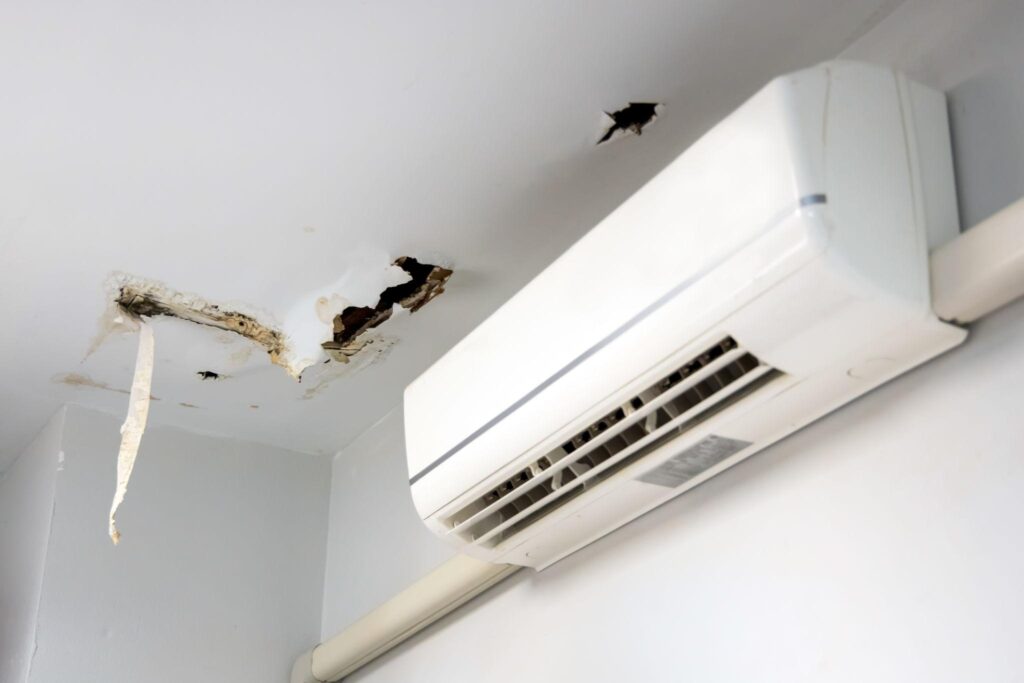
I’ve been fixing water damage in Orlando homes for over 37 years. And if I had to pick one thing that causes more headaches for homeowners than anything else. It’s the air conditioner. Not hurricanes. Not burst pipes. The AC unit is sitting quietly in your attic or closet right now. Most people don’t think about it. Why would you? The AC keeps you cool, you pay the bill, and life goes on. But in Florida, where your AC runs almost every single day of the year, the condensate drain system that carries water away from your unit works overtime and when it gets clogged, water goes somewhere it shouldn’t. That somewhere is usually your ceiling, your walls, or your floor. I’ve walked into homes where the homeowner had no idea anything was wrong until they noticed a soft spot in the ceiling or a brown stain spreading across the drywall. By that point, the damage was weeks in the making. In this article, I’m going to explain exactly how AC condensate leaks cause water damage, what warning signs to look for, what to do if it happens, and how to prevent it from happening in the first place. This is the stuff I wish every Orlando homeowner knew before they called me. What Is AC Condensate and Why Does It Leak? When your air conditioner cools the air inside your home, it pulls moisture out of the air at the same time. That moisture collects on the evaporator coil inside your air handler and drips down into a drain pan below it. From that drain pan, a pipe called the condensate drain line carries the water outside or into a floor drain. On a normal Florida day, your AC unit can pull one to two gallons of water out of the air every hour. In the summer, even more. That’s a lot of water moving through a small pipe every single day. And in Florida, where the air is warm, humid, and full of organic material, that drain line can clog with algae, mold, and debris faster than in almost any other state. When the drain line clogs, the water has nowhere to go. The drain pan fills up and overflows. In a two-story home with the air handler in the attic, that water soaks into the ceiling below. In a single-story home with the unit in a closet, it seeps into the floor or the surrounding walls. The damage starts the moment the pan overflows. But most homeowners don’t notice until hours or days later. The Three Most Common Reasons AC Drain Lines Clog in Orlando Why Orlando Is Especially Vulnerable I want to be honest with you: AC condensate leaks happen everywhere. But in Orlando, the problem is worse for a few specific reasons. Your AC runs almost year-round. In most of the country, people turn their AC off for four or five months in the cooler season. Here in Central Florida, we might turn it off for a few weeks if we’re lucky. That means the drain system works twelve months a year instead of seven. Florida’s humidity is extreme. More humidity in the air means more moisture your AC pulls out, which means more water running through that drain line every day. Algae grows fast here. The same warm temperatures that make Florida a great place to live make it a great place for algae to grow inside your drain line. Without regular flushing, algae can block a drain line in just a few months. In my 37 years working in Orlando homes, I’ve seen AC water damage in every type of home — new construction, older homes, condos, townhouses. No one is immune. But the homeowners who know what to look for catch it early. The ones who don’t end up with much bigger problems. Warning Signs Your AC Is Leaking Water Into Your Home Here’s what I tell every homeowner to watch for. Some of these signs are obvious. Others are easy to miss until the damage is already serious. Signs You Can See Signs That Are Easy to Miss Important: The musty smell matters.If your home smells musty and you can’t figure out why, there’s a real chance water has been sitting somewhere for longer than you think. Mold can begin growing within 24 to 48 hours of water exposure. In Florida’s heat, it can grow even faster. Don’t wait to call someone. What to Do If You Find AC Water Damage If you find water damage from your AC, here’s exactly what I’d tell you to do — in order. Why timing matters so much:I’ve seen jobs that cost $800 and jobs that cost $8,000 — sometimes for what started as the same problem. The difference is almost always how quickly the homeowner acted. Water doesn’t stop moving once it gets into drywall. It spreads. The faster you call, the less damage there is to fix. What Happens During AC Water Damage Restoration When my team arrives at a job like this, here’s what we actually do — because I think homeowners deserve to know what they’re paying for. Step 1: Moisture Assessment We use a thermal imaging camera and moisture meters to find every area that’s been affected. Water travels further than most people expect. A leak in one corner of the attic can show up in a ceiling two rooms away. We map the full extent before we touch anything. Step 2: Water Extraction If there’s standing water, we extract it with professional equipment. We also open up affected areas — removing sections of drywall or ceiling if necessary — to expose wet materials that need to dry. Step 3: Structural Drying We set up industrial air movers and dehumidifiers to dry the affected areas from the inside out. This isn’t something a box fan from the hardware store can do. The drying process usually takes two to five days depending on how much moisture is in the