




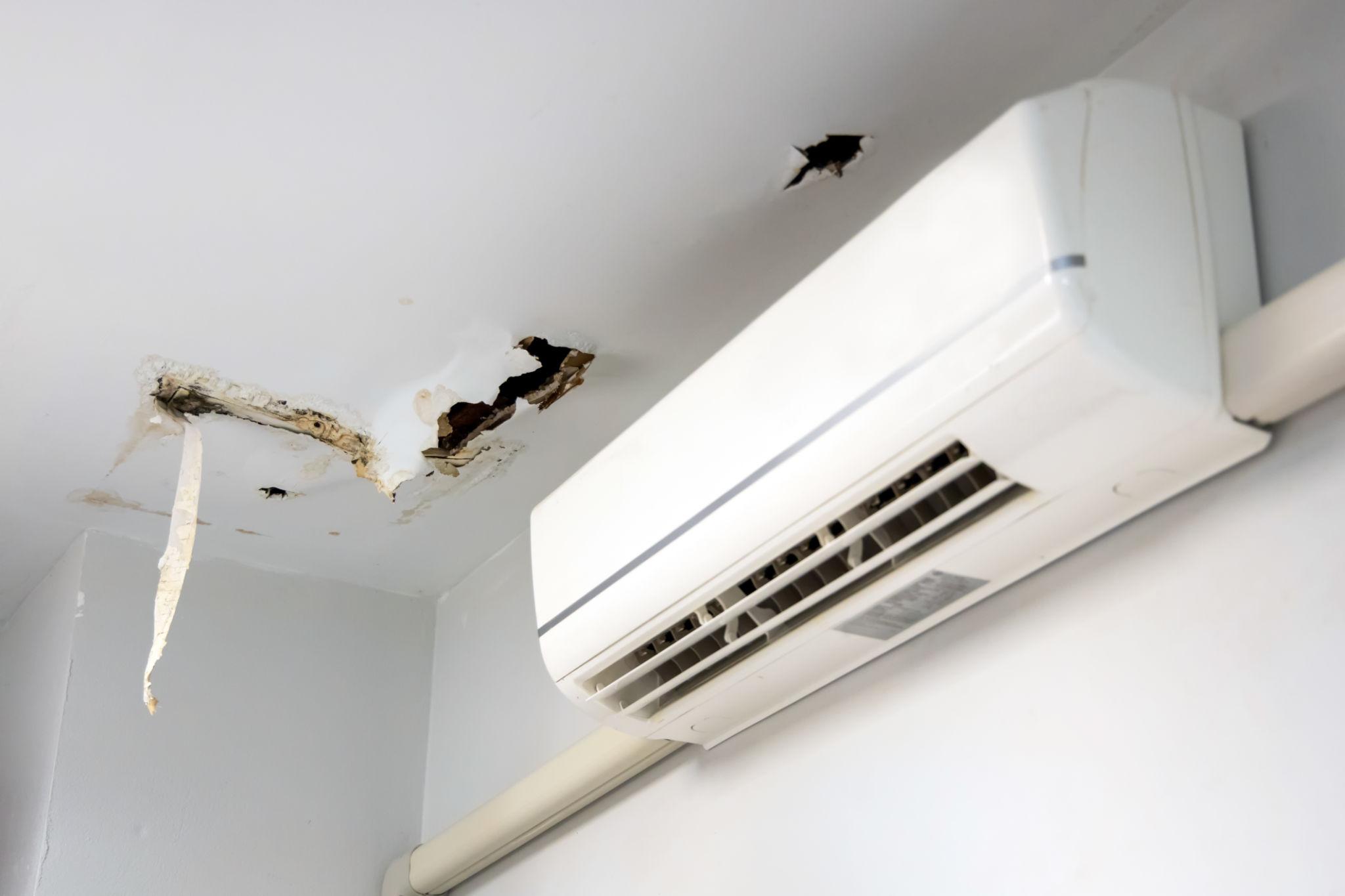
I’ve been fixing water damage in Orlando homes for over 37 years. And if I had to pick one thing that causes more headaches for homeowners than anything else. It’s the air conditioner.
Not hurricanes. Not burst pipes. The AC unit is sitting quietly in your attic or closet right now.
Most people don’t think about it. Why would you? The AC keeps you cool, you pay the bill, and life goes on. But in Florida, where your AC runs almost every single day of the year, the condensate drain system that carries water away from your unit works overtime and when it gets clogged, water goes somewhere it shouldn’t.
That somewhere is usually your ceiling, your walls, or your floor.
I’ve walked into homes where the homeowner had no idea anything was wrong until they noticed a soft spot in the ceiling or a brown stain spreading across the drywall. By that point, the damage was weeks in the making.
In this article, I’m going to explain exactly how AC condensate leaks cause water damage, what warning signs to look for, what to do if it happens, and how to prevent it from happening in the first place. This is the stuff I wish every Orlando homeowner knew before they called me.
What Is AC Condensate and Why Does It Leak?
When your air conditioner cools the air inside your home, it pulls moisture out of the air at the same time. That moisture collects on the evaporator coil inside your air handler and drips down into a drain pan below it.
From that drain pan, a pipe called the condensate drain line carries the water outside or into a floor drain. On a normal Florida day, your AC unit can pull one to two gallons of water out of the air every hour. In the summer, even more.
That’s a lot of water moving through a small pipe every single day. And in Florida, where the air is warm, humid, and full of organic material, that drain line can clog with algae, mold and debris faster than in almost any other state.
When the drain line clogs, the water has nowhere to go. The drain pan fills up and overflows. In a two-story home with the air handler in the attic, that water soaks into the ceiling below. In a single-story home with the unit in a closet, it seeps into the floor or the surrounding walls.
The damage starts the moment the pan overflows. But most homeowners don’t notice until hours or days later.
The Three Most Common Reasons AC Drain Lines Clog in Orlando
- Algae growth — Florida’s heat and humidity are perfect for algae. Without regular maintenance, algae builds up inside the drain line and blocks water flow.
- Dust and debris — Over time, dust from your return air gets past the filter, settles on the coil, and washes into the drain line.
- Improper installation — Some AC units are installed without a secondary drain pan or a float switch that shuts the system off when the primary drain fails. I see this more often than I should.
Why Orlando Is Especially Vulnerable
I want to be honest with you: AC condensate leaks happen everywhere. But in Orlando, the problem is worse for a few specific reasons.
Your AC runs almost year-round. In most of the country, people turn their AC off for four or five months in the cooler season. Here in Central Florida, we might turn it off for a few weeks if we’re lucky. That means the drain system works twelve months a year instead of seven.
Florida’s humidity is extreme. More humidity in the air means more moisture your AC pulls out, which means more water running through that drain line every day.
Algae grows fast here. The same warm temperatures that make Florida a great place to live make it a great place for algae to grow inside your drain line. Without regular flushing, algae can block a drain line in just a few months.
In my 37 years working in Orlando homes, I’ve seen AC water damage in every type of home — new construction, older homes, condos, townhouses. No one is immune. But the homeowners who know what to look for catch it early. The ones who don’t end up with much bigger problems.
Warning Signs Your AC Is Leaking Water Into Your Home
Here’s what I tell every homeowner to watch for. Some of these signs are obvious. Others are easy to miss until the damage is already serious.
Signs You Can See
- Water stains on the ceiling, especially near a vent or in a room below your attic
- Brown or yellow discoloration spreading across drywall
- Paint bubbling or peeling on your ceiling or walls
- Soft or sagging spots on the ceiling when you press gently
- Standing water near your air handler or inside a closet where the unit is located
- A musty smell coming from your vents or from a particular room
Signs That Are Easy to Miss
- A slow drip from the secondary drain line outside your home — this means your primary drain is already clogged
- Higher-than-normal humidity inside your home even when the AC is running
- Your AC is running but the house feels warmer than it should — a clogged coil from moisture buildup can reduce efficiency
- Small dark spots near the air handler that could be the beginning of mold growth
| Important: The musty smell matters.If your home smells musty and you can’t figure out why, there’s a real chance water has been sitting somewhere for longer than you think. Mold can begin growing within 24 to 48 hours of water exposure. In Florida’s heat, it can grow even faster. Don’t wait to call someone. |
What to Do If You Find AC Water Damage
If you find water damage from your AC, here’s exactly what I’d tell you to do — in order.
- Turn off the air conditioner immediately. Don’t run it again until the drain line is cleared and the damage is assessed. Running the AC with a clogged drain will just keep pumping more water into the same spot.
- Turn off the electricity to the affected area if there’s any water near outlets, light fixtures, or your electrical panel. Water and electricity are a dangerous combination.
- Put down towels or buckets to contain standing water, but don’t try to mop up what’s inside the walls or ceiling. That moisture is already there whether you can see it or not.
- Take photos before you touch anything. If you plan to file a homeowner’s insurance claim, you need documentation of the damage as you found it.
- Call a water damage restoration professional. Not a plumber — a restoration company. A plumber can clear the drain line, but they won’t assess the moisture damage inside your walls and ceiling. That’s a different job.
| Why timing matters so much:I’ve seen jobs that cost $800 and jobs that cost $8,000 — sometimes for what started as the same problem. The difference is almost always how quickly the homeowner acted. Water doesn’t stop moving once it gets into drywall. It spreads. The faster you call, the less damage there is to fix. |
What Happens During AC Water Damage Restoration
When my team arrives at a job like this, here’s what we actually do — because I think homeowners deserve to know what they’re paying for.
Step 1: Moisture Assessment
We use a thermal imaging camera and moisture meters to find every area that’s been affected. Water travels further than most people expect. A leak in one corner of the attic can show up in a ceiling two rooms away. We map the full extent before we touch anything.
Step 2: Water Extraction
If there’s standing water, we extract it with professional equipment. We also open up affected areas — removing sections of drywall or ceiling if necessary — to expose wet materials that need to dry.
Step 3: Structural Drying
We set up industrial air movers and dehumidifiers to dry the affected areas from the inside out. This isn’t something a box fan from the hardware store can do. The drying process usually takes two to five days depending on how much moisture is in the structure.
Step 4: Mold Prevention Treatment
We apply an antimicrobial treatment to all affected surfaces before closing anything back up. This is not optional in Florida. The mold risk is too high to skip this step.
Step 5: Repairs and Repainting
Once everything is dry and treated, we repair the drywall, texture and paint. Because we handle both restoration and painting at Philip White Painting and Restoration LLC, you don’t have to coordinate two different contractors. We take the job from start to finish.
How to Prevent AC Condensate Leaks
The good news is that most AC water damage is preventable. These are the things I recommend to every homeowner in Orlando.
Flush Your Drain Line Every Month
Pour one cup of white vinegar or diluted bleach into your condensate drain line access point — usually a PVC pipe near your air handler with a cap on it. This kills algae before it builds up. I do this at my own home every month. It takes two minutes.
Check Your Drain Pan Regularly
Look inside the drain pan under your air handler every few months. If you see standing water, your drain line is either slow or clogged. Don’t wait for it to overflow.
Install a Float Switch
A float switch is a small device that automatically shuts off your AC if the drain pan fills with water. If your system doesn’t have one, get one installed. It costs very little and it can save you thousands in water damage. I’ve seen this one device pay for itself over and over again.
Change Your Air Filter on Schedule
A dirty filter lets more dust reach the evaporator coil. That dust washes into the drain line and contributes to clogs. Change your filter every 30 to 60 days — more often if you have pets or allergies.
Schedule Annual AC Maintenance
Have an HVAC technician inspect and flush your condensate system once a year. This is separate from the regular tune-up. Ask specifically for condensate drain cleaning. It’s worth it.
Does Homeowner’s Insurance Cover AC Condensate Damage?
This is one of the most common questions I get, and the honest answer is: it depends.
Most standard Florida homeowner’s insurance policies cover sudden and accidental water damage. If your drain line clogs and overflows overnight and you find damage the next morning, that’s generally covered.
What’s usually not covered is gradual damage — meaning if the leak has been going on for weeks or months and you didn’t address it, many insurers will deny the claim on the grounds that the homeowner should have caught it sooner.
This is another reason why knowing the warning signs matters. The faster you catch a leak and call it in, the stronger your insurance position.
I’ve helped many Orlando homeowners navigate the insurance claim process after AC water damage. If you have questions about what your policy covers, feel free to call us — I’m happy to walk you through it.
A Job I’ll Always Remember
A few years ago, I got a call from a homeowner in east Orlando. She’d noticed a small brown spot on her bedroom ceiling about the size of a dinner plate. She figured it was old and forgot about it.
Three weeks later, the spot was the size of a car door. When I got there, I cut open the ceiling and found insulation that had been soaking wet for at least a month. The drywall was soft, the wood was showing early signs of rot, and there was mold growing in the corner.
The AC drain line in her attic had been clogged the whole time. What could have been a $600 fix turned into a $4,200 job.
She felt terrible. But I told her what I’ll tell you: most people don’t know to look for this. Now you do.
Noticed Something That Doesn’t Look Right?
If you’ve seen a water stain, a soft ceiling, or a musty smell in your home, don’t wait to find out what it is. Water damage moves fast in Florida, and early action always costs less than late action.
My team at Philip White Painting and Restoration LLC has been handling AC water damage, restoration, and repainting in Orlando since 1989. We’re IICRC certified, BBB Accredited A+, and we respond quickly — 24 hours a day.
Call us at (407) 860-5846 or request a free estimate. We’ll come take a look and give you a straight answer about what’s going on and what it will take to fix it.
No pressure. No runaround. Just honest work.
