



After water damage in your home, one of the first questions people ask is whether mold is going to be a problem. The honest answer is: it depends. And in Florida, the odds are not in your favor if you wait.
Mold does not always follow water damage. But in Central Florida’s warm, humid climate, the conditions that allow mold to grow are almost always present. The difference between a mold problem and no mold problem usually comes down to one thing: how quickly you act.
Here is everything Florida homeowners need to know about water damage and mold.
How Mold Grows After Water Damage
Mold is a fungus that reproduces by releasing microscopic spores into the air. These spores are everywhere, including in your home right now. Under normal, dry conditions they are harmless. But introduce moisture and the right temperature, and those spores find a surface to land on and start growing.
Mold needs three things to grow:
- Moisture — from water damage, high humidity, or condensation
- A food source — drywall paper, wood, insulation, carpet, and most building materials
- The right temperature — typically between 40 and 100 degrees Fahrenheit
Your home already provides the food source and the temperature. After water damage, it also provides moisture. That is why mold after water damage is so common, especially in Florida.
How Long Does It Take for Mold to Grow After Water Damage?
This is the most important number every Florida homeowner should know: mold can begin growing within 24 to 48 hours of water exposure.
That does not mean you will see visible mold in 24 hours. Mold typically becomes visible to the naked eye after it has been growing for a week or more. By the time you see it, it has already colonized the surface and may have spread to nearby materials.
The 24 to 48 hour window is the critical period. If water damage is identified and properly dried within that time frame, mold growth can usually be prevented entirely. Wait longer and you are likely dealing with mold remediation on top of water damage restoration.
Why Florida Is a High-Risk Environment for Mold
Florida’s climate creates near-ideal conditions for mold growth. Here is why Orlando homeowners face higher risk than most:
- Average relative humidity in Central Florida ranges from 70 to 90 percent on most days
- Year-round warm temperatures keep mold comfortably in its ideal growth range
- AC systems that run constantly create condensate and can spread mold spores through ductwork if affected
- High humidity outside means even after visible water is gone, the ambient moisture in the air slows drying and encourages mold
What might be a minor water incident in a dry climate can become a mold problem within days in Orlando. This is not an exaggeration. It is something we see regularly in our restoration work.
Where Does Mold Grow After Water Damage?
Mold does not just grow on wet surfaces. It follows moisture wherever it travels, which means it often grows in places you cannot easily see:
- Inside wall cavities where water has soaked through drywall
- Under flooring and in the subfloor
- In attic insulation from roof leaks or AC condensate
- Behind baseboards and trim
- Inside ductwork if the AC system was affected
- Under carpet padding
This is why professional moisture detection is so important after water damage. Surface drying does not address moisture trapped inside the structure, and that hidden moisture is where mold takes hold.
Can You Prevent Mold After Water Damage?
Yes, in most cases mold after water damage is preventable. The key is professional, thorough drying within the first 24 to 48 hours combined with antimicrobial treatment.
Here is what effective mold prevention after water damage looks like:
- All standing water is extracted immediately using professional-grade equipment
- Moisture meters are used to locate water hiding behind walls, under floors, and in ceilings
- Industrial air movers and dehumidifiers are placed to dry the structure thoroughly, not just the surface
- Affected materials that cannot be dried, such as saturated insulation or badly soaked drywall, are removed
- Antimicrobial treatments are applied to all affected surfaces to stop mold spore growth
- Moisture levels are monitored daily until readings confirm the structure is fully dry
When all of these steps are completed properly and quickly, mold growth can be stopped before it starts.
What If Mold Has Already Grown?
If you are reading this after discovering mold following water damage in your home, do not panic. Mold is treatable. But it does need to be handled correctly.
Small surface mold on non-porous materials like tile can sometimes be cleaned with an EPA-registered mold cleaner. However, mold that has grown into porous materials like drywall, wood, insulation, or carpet cannot simply be cleaned off the surface. These materials typically need to be removed and replaced.
Attempting to clean mold yourself without proper protective equipment and containment procedures can spread spores throughout your home, making the problem worse. For anything beyond a very small surface mold spot, professional mold remediation is the right call.
Philip White Painting and Restoration LLC handles both water damage restoration and mold remediation in Orlando. If mold has developed from water damage in your home, we can assess the extent of the problem and handle full remediation.
Signs Mold Is Growing in Your Home After Water Damage
If you are not sure whether mold has developed after a water event, watch for these signs:
- A musty or earthy smell that did not exist before the water damage
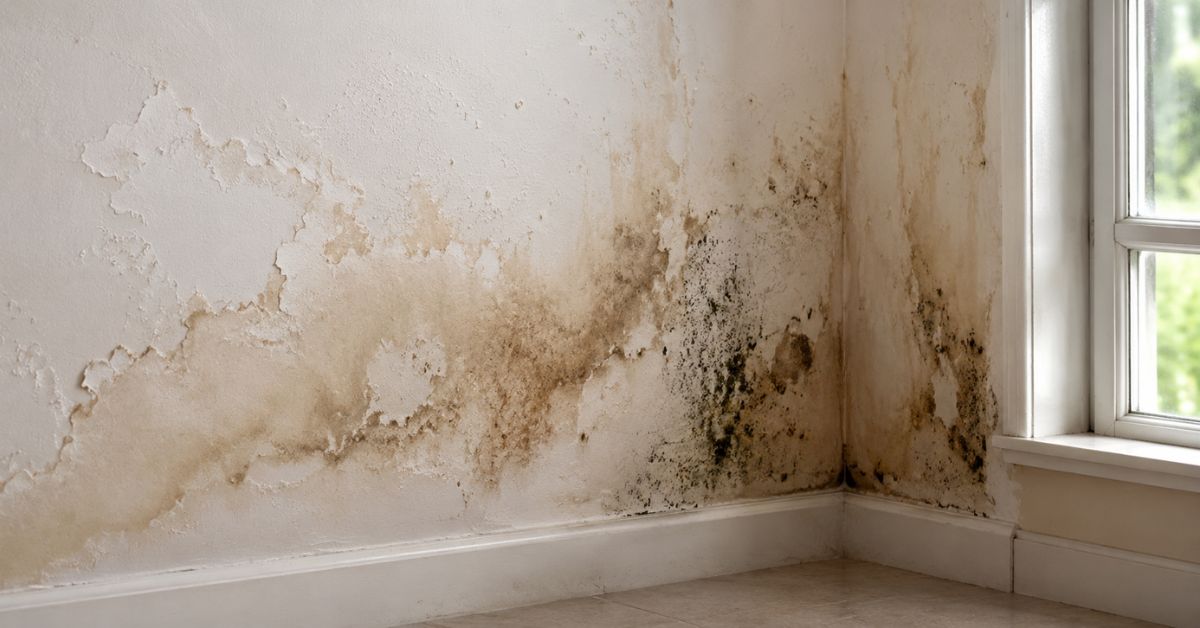
- Visible discoloration on walls, ceilings, or floors including black, green, white, or gray spots or fuzzy patches
- Allergic symptoms that worsen indoors sneezing, runny nose, itchy eyes, or respiratory irritation
- Worsening asthma symptoms in household members
- Walls or ceilings that feel soft or appear to be deteriorating
If you notice any of these after water damage, have a professional assess the affected areas before assuming the problem has resolved on its own.
The Real Cost of Ignoring Mold After Water Damage
Mold remediation is significantly more expensive than mold prevention. Here is what the cost difference looks like:
- Professional drying and antimicrobial treatment within 48 hours: typically a few hundred to a few thousand dollars depending on the size of the affected area
- Mold remediation after mold has established in drywall and framing: can easily run $5,000 to $20,000 or more depending on the extent of spread
Beyond the financial cost, living with mold in your home is a health risk. Prolonged exposure to mold spores can cause respiratory illness, chronic headaches, fatigue, and more serious health problems in vulnerable individuals.
How We Stop Mold Before It Starts in Orlando Homes
When Philip White Painting and Restoration LLC responds to water damage in an Orlando home, our entire process is designed around mold prevention from the first moment we arrive. We do not just extract visible water and leave.
We use professional moisture meters to find every pocket of hidden moisture, deploy industrial drying equipment that reaches inside wall cavities and under floors, apply EPA-registered antimicrobial treatments, and monitor moisture levels daily until we confirm the structure is completely dry.
The goal is not just to dry your home. It is to dry your home completely so that mold never gets the chance to start.
| Dealing With Water Damage in Orlando? Philip White Painting and Restoration LLC provides 24/7 emergency water damage restoration and mold remediation in Orlando, FL. We stop the damage fast before mold gets the chance to start. Call Now: (407) 860-5846 Free Estimate: https://philipwhitepainting.com/free-estimate/ |
Frequently Asked Questions
How quickly does mold grow after a flood in Florida?
Mold can begin growing within 24 to 48 hours of water exposure. In Florida’s warm, humid climate, this timeline can be even shorter. Getting professional drying started within the first day is the most effective way to prevent mold after flooding.
Can mold grow inside walls after water damage?
Yes, and this is one of the most common scenarios we see. Water soaks through drywall and into the wall cavity where insulation, wood framing, and the back side of drywall provide ideal mold growing conditions. Surface drying alone will not address this.
How do I know if I have mold in my walls?
Signs include a musty smell, soft or discolored sections of drywall, allergic symptoms that improve when you leave home, or visible mold at the base of walls or in corners. A professional moisture assessment with thermal imaging can detect hidden mold growth without tearing into walls.
Does homeowner’s insurance cover mold remediation in Florida?
Coverage varies. If the mold resulted directly from a covered water damage event that was reported promptly, remediation may be covered. Mold from gradual leaks or poor maintenance is typically excluded. Review your policy and call your insurer early.
Is it safe to stay in my home if I have mold from water damage?
For small, isolated mold spots, short-term occupancy is generally not immediately dangerous for healthy adults. However, if mold is extensive, if household members have respiratory conditions, or if you can smell mold throughout the home, we recommend finding temporary accommodations until remediation is complete.
The Bottom Line
Water damage does not always lead to mold, but in Florida the risk is real and the window to prevent it is short. Act within 24 to 48 hours and you can usually stop mold before it starts. Wait longer and you are likely facing a much bigger, more expensive problem.
If you have experienced water damage in your Orlando home, do not wait to see what happens. Call Philip White Painting and Restoration LLC at (407) 860-5846. We are available 24 hours a day and we will get your home dried completely and safely before mold has a chance to take hold.
