Best Exterior Painters in Orlando, FL — How to Find and Hire the Right One
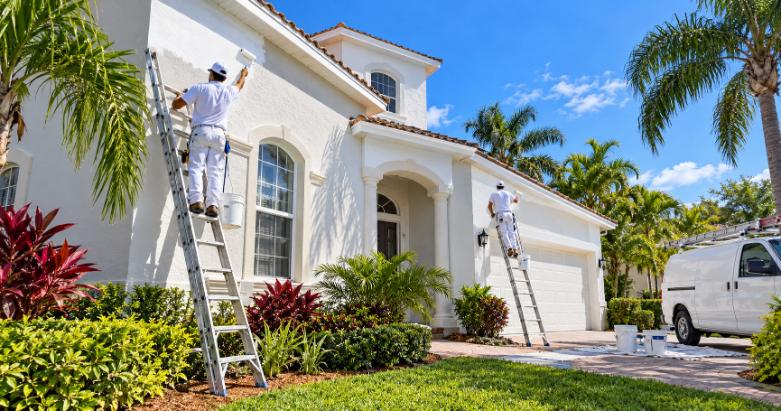
Finding a reliable exterior painter in Orlando is not difficult. Finding one who will do the job correctly — with proper surface preparation, the right materials for Florida’s climate and workmanship that actually lasts — takes more effort. This guide tells you exactly what to look for when hiring an exterior painting contractor in Orlando, what questions to ask before signing anything and what separates a paint job that holds up for a decade from one that starts peeling within two years. Why Choosing the Right Exterior Painter in Orlando Matters Exterior painting in Florida is not the same as painting a home in a moderate climate. Orlando’s combination of intense UV radiation, year-round humidity, a five-month rainy season and thermal expansion in stucco surfaces puts significant demands on both the paint product and the application process. A competent exterior painter in Orlando understands these conditions and adjusts their process accordingly — the right paint products, proper surface preparation, correct timing and proven techniques. An inexperienced or cut-rate contractor does not. The difference shows up within one to three years when the paint starts fading, cracking, or peeling from a job that should have lasted seven to ten. The cost difference between a quality paint job and a poor one is usually $500 to $1,500 upfront. The cost of repainting two years later — plus potential substrate damage from moisture infiltration is far more. Getting the right contractor the first time is always the better financial decision. What to Look For in an Orlando Exterior Painting Contractor 1. Licensed and Insured in Florida This is the baseline requirement — not a nice-to-have. Florida requires painting contractors to carry a state license for work above a certain value threshold. Liability insurance protects your property if something is damaged during the job. Workers’ compensation insurance protects you from liability if a worker is injured on your property. Ask every contractor for their Florida license number and certificate of insurance before they begin any work. A reputable company will provide both without hesitation. If a contractor cannot or will not provide proof of insurance, do not hire them regardless of how attractive their quote looks. 2. Verifiable Local Reviews Look for consistent Google reviews with specific detail about the work — not vague five-star ratings with no content. Reviews that mention the crew by name, describe the preparation process, comment on how the paint looks one or two years later or note specific aspects of the job tell you something real. Generic reviews with no detail are easy to fabricate. Pay attention to how the company responds to negative reviews. Every business receives critical feedback occasionally. A company that responds professionally, acknowledges the concern and offers to resolve the issue demonstrates accountability. A company that argues with or dismisses critical reviews tells you how they handle problems. For a local painting company in Orlando, 4.5 stars or above with fifty or more reviews is a meaningful signal. A company with four reviews and a five-star average tells you very little. 3. Specific Experience with Florida Stucco The majority of homes in the Orlando area are stucco construction. Stucco painting has specific requirements — crack assessment, elastomeric repair compound, masonry primer and either elastomeric coating or premium 100% acrylic paint rated for Florida’s climate and thermal movement. A painter without specific experience on Florida stucco will treat it like any other surface, skip the steps that matter and produce a result that fails early. When interviewing contractors, ask directly: How do you handle stucco crack repair before painting? What primer do you use on stucco? Do you use elastomeric paint or standard acrylic? A knowledgeable contractor will answer these questions without hesitation and explain the reasoning behind their choices. A contractor who brushes past these questions or gives vague answers is not the right choice for your home. 4. A Detailed Written Estimate A legitimate exterior painting contractor in Orlando will provide a written estimate that specifies exactly what is included — not a ballpark verbal quote scribbled on a business card. The estimate should include: Any contractor who resists providing a written estimate with this level of detail is either inexperienced or has something to hide. Do not proceed without written documentation of what you are paying for. 5. Transparency About Paint Products The paint product used on your home’s exterior matters enormously in Florida. Premium 100% acrylic products like Sherwin-Williams Duration, Sherwin-Williams Emerald or Benjamin Moore Aura cost $55 to $90 per gallon but deliver meaningfully better UV resistance, color retention and mildew resistance than standard products. Budget exterior paint costs $20 to $35 per gallon and will show visible fading, chalking and deterioration within three to five years in Orlando’s conditions. The difference in paint cost on a standard home is $400 to $800 — a fraction of the total job cost. Any contractor proposing to save money by using budget paint is costing you more in the long run. Ask every contractor what specific paint product they are using and look it up. If they propose a product you cannot find on the manufacturer’s website or a house-brand paint from a hardware store, that is a signal to ask more questions. 6. A Proper Preparation Process In exterior painting, preparation determines longevity. A correctly prepared surface means paint that adheres properly and lasts the full expected lifespan. Skipped preparation means early failure regardless of paint quality. For exterior painting on an Orlando home, proper preparation includes: Ask every contractor to walk you through their preparation process. If they describe something shorter than this list, ask why. If they cannot explain their preparation in specific terms, they probably skip steps. Philip White Has Done This for 37 Years Licensed · Insured · BBB A+ · 5.0★ Google · Serving Orlando Since 1989 | Call (407) 860-5846 Red Flags to Watch For When Hiring an Exterior Painter in Orlando Red Flag What It Usually Means No license or insurance provided Unregistered
How to Paint a Stucco Home in Orlando, FL. The Right Way
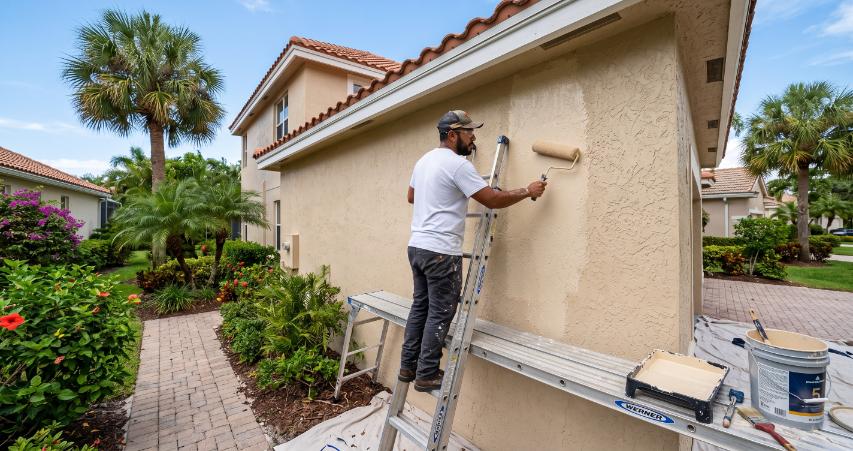
Most homes in the Orlando area are stucco construction. If you have lived here for any length of time, you know what the exterior of a typical Central Florida home looks like — that textured cement-like surface that covers the vast majority of houses built here over the past five decades. What many Orlando homeowners do not know is that painting stucco is meaningfully different from painting wood siding, fiber cement or brick. Stucco has specific requirements at every stage, from crack assessment and repair to product selection and application timing. Done correctly, a stucco paint job in Florida lasts 7 to 15 years. Done incorrectly, it fails within 2 to 3 years. This guide covers the complete process for painting a stucco home in Orlando the right way — based on 37 years of painting stucco homes throughout Central Florida. Why Stucco Is Different From Other Exterior Surfaces Stucco is a cement-based plaster applied in layers over a wire mesh (lath) attached to the home’s framing. Unlike wood siding or fiber cement panels, stucco is porous — it absorbs moisture, expands and contracts with temperature changes and cracks over time as the substrate beneath it moves. In Florida’s climate, these characteristics are amplified. Orlando’s heat causes the stucco to expand during the day and contract at night. Heavy summer rainfall drives water into any crack or gap. Year-round humidity keeps moisture levels elevated in the material. These conditions create specific challenges that must be addressed before any paint is applied. The consequences of painting stucco incorrectly in Florida include: All of these problems are preventable with the right process and materials. Step 1: Assess the Stucco Condition Before Anything Else Before pressure washing, before buying paint, before anything else, walk the entire exterior of your home and assess the condition of the stucco. This is the most important step and the one most often skipped. What to Look For Document every issue you find before starting work. The condition of the stucco determines the repair scope, the products needed and the total cost of the project. Step 2 — Pressure Wash the Entire Exterior Once you have assessed the stucco condition, the next step is a thorough pressure wash of the entire exterior. This is not optional, it is essential for paint adhesion. For stucco surfaces, pressure washing removes: Pressure wash stucco at 1,500 to 2,500 PSI — lower than what you would use on concrete. Stucco is softer than concrete and can be damaged by excessive pressure. Use a fan-tip nozzle at 25 to 40 degrees to distribute the force. Keep the nozzle moving, do not focus high pressure on a single spot. For mold and algae, apply a diluted bleach solution or professional mildewcide before pressure washing and allow it to dwell for 10 to 15 minutes before rinsing. This kills biological growth at the root rather than just removing the surface layer. After pressure washing, allow the stucco to dry completely, typically 24 to 48 hours in Orlando’s climate before any repair or painting work begins. Painting wet or damp stucco traps moisture in the wall and causes adhesion failure and mold growth behind the paint film. See our pressure washing services in Orlando if you need professional pressure washing before your painting project. Step 3: Repair All Cracks and Damaged Areas This is the step that separates a paint job that lasts from one that fails. Every crack in the stucco must be addressed before any primer or paint is applied. Painting over stucco cracks without repairing them does not hide them permanently — the cracks reappear through the new paint within months as the stucco continues to move. Hairline Cracks (Under 1/16 Inch) Hairline cracks are the most common type in Florida stucco and are best filled with a high-quality elastomeric caulk or elastomeric crack filler. Elastomeric products remain flexible after curing, allowing them to move with the stucco rather than re-cracking. Application process for hairline cracks: Larger Cracks and Damaged Areas Cracks wider than 1/16 inch, areas of hollow stucco or sections where the stucco has separated from the substrate require more substantial repair. The damaged stucco must be removed back to solid material and replaced with new stucco patching compound. For DIY repairs: For significant stucco damage covering large areas or involving structural cracks, professional stucco repair is the right call. Poorly executed stucco patches fail faster than the original surface and create ongoing problems. Addressing Efflorescence If you found white mineral deposits on the stucco, these must be treated before painting. Efflorescence indicates moisture migrating through the stucco from inside the wall. Often from poor drainage, leaking gutters or moisture infiltrating from above. First, address the moisture source. Painting over efflorescence without fixing the cause will result in the deposits pushing back through the new paint within months. Once the moisture source is addressed, remove efflorescence with a stiff brush and a diluted muriatic acid solution (10 parts water to 1 part acid), rinse thoroughly and allow to dry completely before priming. Step 4: Choose the Right Paint for Florida Stucco Paint selection is where many Orlando homeowners make the most expensive mistake. Standard exterior latex paint is not the best choice for stucco in Florida’s climate. Here is what to use: Option A: Elastomeric Paint or Coating (Best for Florida Stucco) Elastomeric coatings are rubber-based products applied at significantly higher thickness than standard paint, typically 10 to 20 mils compared to 1 to 2 mils for standard paint. This thickness gives them properties that standard paint cannot provide: Recommended elastomeric products for Florida stucco: Sherwin-Williams Conflex XL, Sherwin-Williams Loxon XP, Parex USA elastomeric or similar products from major manufacturers. Apply with a thick-nap roller (3/4 inch or 1 inch) to work the material into the texture. Option B: Premium 100% Acrylic Exterior Paint If you are not using an elastomeric coating, use a premium 100% acrylic exterior paint rated for masonry surfaces. Products like Sherwin-Williams Duration Exterior, Sherwin-Williams Emerald
Interior Painting Cost in Orlando, FL. Honest 2026 Pricing Guide

Planning to repaint the inside of your Orlando home and want to know what it is going to cost? Interior painting is one of the most impactful home improvements you can make and one where pricing varies widely depending on the scope of the project, the size of your home and the quality of work you are after. This guide gives you a straightforward, honest breakdown of interior painting costs in Orlando, FL for 2026, based on real local pricing and our experience as a painting company that has been serving Central Florida since 1989. Interior Painting Cost in Orlando, Quick Overview Most interior painting projects in Orlando fall within these ranges: Project Scope Price Range Average Cost Single room (standard bedroom) $350 – $700 $500 Living room or master bedroom $600 – $1,200 $850 Kitchen (walls only, no cabinets) $400 – $900 $600 Bathroom (small) $250 – $500 $350 Bathroom (master) $400 – $800 $575 Whole house (1,000–1,500 sq ft) $2,500 – $4,500 $3,200 Whole house (1,500–2,500 sq ft) $4,000 – $7,000 $5,200 Whole house (2,500–3,500 sq ft) $6,500 – $10,000 $8,000 Ceilings only (per room) $150 – $350 $225 Trim and baseboards (per room) $100 – $250 $160 These ranges include labor and materials for walls and ceilings. Trim, doors and baseboards are often priced separately. The only way to get an accurate price for your specific home is an in-person walkthrough. Room sizes, ceiling heights, condition and paint selection all affect the final number. Interior Painting Cost Per Square Foot in Orlando Many painters in Orlando price interior work by the square foot of paintable wall surface. Here is what to expect: Surface Type Cost Per Sq Ft Notes Walls — standard (8 ft ceiling) $1.50 – $3.50 Most common rate in Orlando Walls — high ceiling (9–12 ft) $2.00 – $4.50 Extra height adds labor Ceilings (flat) $1.00 – $2.50 Priced separately from walls Ceilings (textured/popcorn) $1.50 – $3.50 More difficult to coat evenly Trim and baseboards (per linear ft) $1.50 – $4.00 Semi-gloss finish standard Doors (per door, both sides) $75 – $150 Includes prep and two coats Note that square footage pricing is based on paintable wall area, not floor area. A 200 square foot bedroom with 8-foot ceilings has approximately 500 to 600 square feet of paintable wall and ceiling surface. This is why interior painting quotes are often higher than homeowners expect when calculating from floor square footage alone. What Factors Affect Interior Painting Cost in Orlando? Number and Size of Rooms The most straightforward factor is scope. More rooms and larger rooms mean more wall surface, more paint and more labor. Painting a whole house is priced differently than individual rooms, most painters offer a lower per-room rate for whole-house projects because mobilization, masking and cleanup are more efficient at scale. Ceiling Height Standard 8-foot ceilings are straightforward. Homes with 9, 10, or vaulted ceilings require longer rollers, extension poles and sometimes ladders or scaffolding. Expect to pay 20 to 40 percent more per square foot for rooms with ceilings above 9 feet. Many Orlando homes built in the 1990s and 2000s have 10-foot ceilings in living areas. This is worth mentioning when requesting a quote. Condition of Existing Walls Walls in good condition with intact existing paint require minimal prep. Walls with significant nail holes, cracks, water stains, old repairs or damaged drywall require additional patching, sanding and priming before paint can be applied. This prep work adds meaningful time and cost. Be upfront about wall condition when requesting quotes. A quote given without seeing the walls may not account for necessary repairs. Number of Colors Painting every room a single color throughout the house is faster and less expensive than using multiple colors in different rooms. Each color change requires cleaning brushes and rollers, re-masking and in some cases applying additional coats for full coverage. For whole-house projects, using one consistent paint color with a single accent wall option keeps costs lower than 12 different colors in 12 different rooms. Paint Quality and Sheen Paint cost is a real component of interior painting pricing. Standard-grade paint costs $25 to $35 per gallon. Premium products like Sherwin-Williams Emerald, Benjamin Moore Aura, or similar cost $60 to $90 per gallon. The difference in durability, coverage and washability is significant, especially in high-traffic areas like hallways, kitchens and children’s rooms. At Philip White Painting and Restoration LLC, we use premium-grade paint on all interior projects because it covers better, lasts longer and looks better after cleaning. Furniture and Room Preparation Most professional painters will move light furniture away from walls but do not move heavy pieces or clear out rooms entirely. Rooms that are fully cleared before the painter arrives take less time which can reduce cost on time-and-materials projects. Confirm with your painter what prep they expect from you before the job begins. Trim, Doors, and Baseboards Trim work is almost always priced separately from wall painting. Painting all interior trim, baseboards, door frames and doors in a home is a significant additional scope. On a 2,000 square foot home, trim painting alone can add $1,500 to $3,000 to the total project cost depending on the amount of trim and the finish required. Semi-gloss or gloss finishes on trim require more careful application and additional coats than flat or eggshell finishes on walls. Popcorn or Textured Ceilings Many Orlando homes built before 2000 have popcorn ceilings. Painting popcorn ceilings requires a thick-nap roller and careful application to avoid knocking off texture. It uses significantly more paint than smooth ceilings and takes longer. If you are considering removing popcorn ceiling texture before painting, note that pre-1980 popcorn ceilings may contain asbestos, testing is recommended before any removal work. Get a Free Interior Painting Estimate in Orlando Every home is different. The only accurate price is one based on an in-person walkthrough of your specific space. Philip White Painting and Restoration LLC provides free, no-obligation estimates for all interior painting projects in
How Much Does Cabinet Painting Cost in Orlando, FL Honest 2026 Pricing Guide
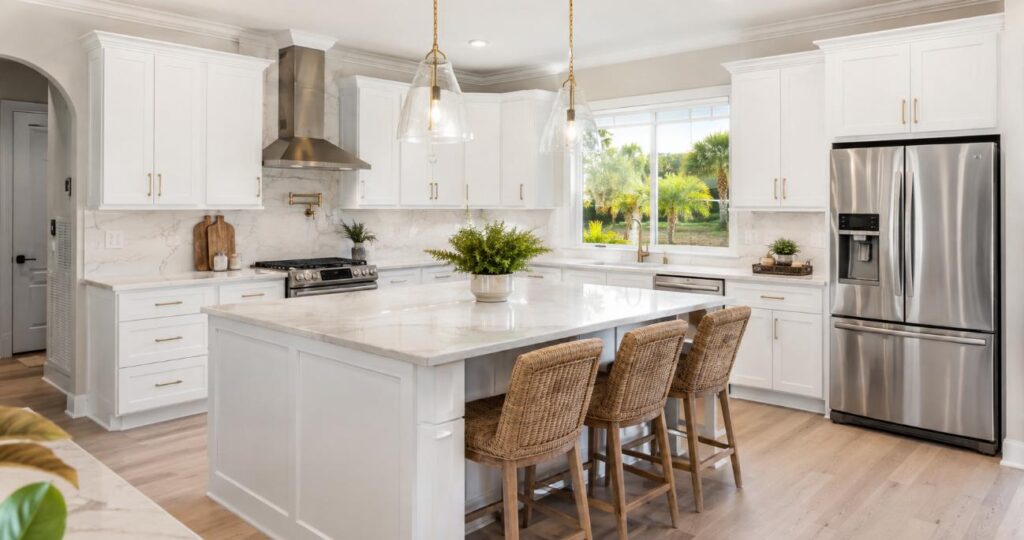
If you are thinking about painting your kitchen cabinets in Orlando, cost is probably one of the first things you want to know. Cabinet painting is one of the most popular home improvement projects in Central Florida right now and for good reason. It costs a fraction of full cabinet replacement while delivering a dramatic transformation. But cabinet painting pricing varies widely depending on the number of cabinets, the painting method, the condition of the existing finish and the contractor you choose. This guide gives you an honest, detailed breakdown of what cabinet painting costs in Orlando, FL in 2026 based on our experience as a local painting company that has been serving Central Florida since 1989. Cabinet Painting Cost in Orlando, Quick Overview Most residential cabinet painting projects in Orlando fall within these ranges: Project Scope Price Range Average Cost Small kitchen (10–20 cabinet doors) $800 – $1,500 $1,100 Medium kitchen (20–35 cabinet doors) $1,500 – $2,800 $2,100 Large kitchen (35–50 cabinet doors) $2,800 – $4,500 $3,500 Extra large / full kitchen + island $4,500 – $7,000+ $5,500 Bathroom vanity cabinets (small) $300 – $700 $475 Bathroom vanity cabinets (double) $600 – $1,200 $900 Laundry or utility cabinets $400 – $900 $600 These ranges reflect professional cabinet painting using proper preparation, primer and finish coats. They include labor and materials but not cabinet hardware replacement or structural repairs. The only accurate price is one based on an in-person assessment of your specific kitchen. Cabinet Painting vs Cabinet Replacement, Cost Comparison One of the most common questions homeowners ask is whether to paint or replace their cabinets. Here is an honest comparison: Option Typical Cost (Orlando) Timeline Professional cabinet painting $1,500 – $4,500 3–5 days Cabinet refacing (new doors, same boxes) $5,000 – $15,000 1–2 weeks Full cabinet replacement (stock) $8,000 – $25,000 3–6 weeks Full cabinet replacement (semi-custom) $15,000 – $40,000+ 6–12 weeks Cabinet painting makes the most financial sense when the cabinet boxes are structurally sound, the doors and drawer fronts are in good condition and the layout works well for your kitchen. If the boxes are damaged, warped or the layout needs to change, replacement becomes the better option. Spray Painting vs Brush and Roller, How Method Affects Cabinet Painting Cost Professional Spray Painting Spray painting cabinets produces the smoothest, most factory-like finish. It requires removing cabinet doors and drawer fronts, transporting them to a spray booth or setting up proper containment in your home and applying multiple coats with professional spray equipment. Spray painting typically costs 20 to 30 percent more than brush and roller application, but the finish quality is significantly higher. For kitchen cabinets where you see the surface up close every day, the extra cost is usually worth it. Most professional cabinet painters in Orlando who quote at the higher end of the price range are using spray application. Companies quoting at the lower end are often using brush and roller. Brush and Roller Application Brush and roller cabinet painting is less expensive but produces a finish with more texture. In the hands of an experienced painter using high-quality paint and proper technique, the result can still look very good. However, it rarely achieves the smoothness of spray application. Brush and roller is a reasonable choice for utility cabinets, laundry room cabinets or garage cabinets where the finish does not need to be perfect. For kitchen cabinets in a visible, high-use area, spray painting is the better investment. What Factors Affect Cabinet Painting Cost in Orlando? Number of Cabinet Doors and Drawer Fronts This is the primary driver of cost. Every door and drawer front requires sanding, priming and two finish coats, usually done separately from the cabinet boxes. More doors means more time, more materials and higher cost. When getting a quote, confirm whether it covers only doors and fronts or also the cabinet boxes, frames and interior shelving. Condition of Existing Cabinets Cabinets in good condition with intact original finish require less prep work than those with peeling paint, heavy grease buildup, water damage or previous DIY paint jobs. Old latex paint over original factory finish often requires extra sanding and bonding primer to ensure adhesion. Significantly damaged or delaminating cabinet surfaces may not be suitable for painting. Cabinet Material and Surface Type Solid wood cabinets take paint well. MDF (medium-density fiberboard) doors also paint well when properly primed. Laminate cabinets require special bonding primer and more careful prep and the results are less predictable. Thermofoil cabinets, the vinyl-wrapped type common in 1990s Orlando kitchens, typically cannot be successfully painted and are better candidates for replacement or refacing. Degreasing and Prep Work Kitchen cabinet surfaces accumulate years of cooking grease, smoke residue and grime. This contamination must be completely removed before any primer or paint can adhere properly. Thorough degreasing, sanding all surfaces to create a mechanical bond, filling holes and imperfections and applying a quality bonding primer are all essential steps that add time and cost, but are non-negotiable for a durable result. Paint Product and Finish The paint used on cabinets matters enormously. Cabinet paint needs to be harder and more durable than standard interior wall paint because cabinets are handled constantly, opened, closed, wiped down and exposed to moisture and heat. We use cabinet-specific products such as Benjamin Moore Advance, Sherwin-Williams Emerald Urethane or similar alkyd-hybrid formulations that cure to a hard, durable finish. These products cost more per gallon than standard interior paint but are the right choice for cabinets. Hardware Removal and Reinstallation Most professional cabinet painters remove all hardware before painting and reinstall it after. This adds time but is necessary for a clean result around hinges, pulls and knobs. If you are also replacing hardware as part of the project, confirm whether the painter’s quote includes the new hardware or just installation. Color Change Painting from a dark color to a very light color or vice versa, requires additional coats to achieve full coverage. Standard light-to-light or light-to-medium color changes require two finish
Pressure Washing Cost in Orlando, FL 2026 Pricing Guide
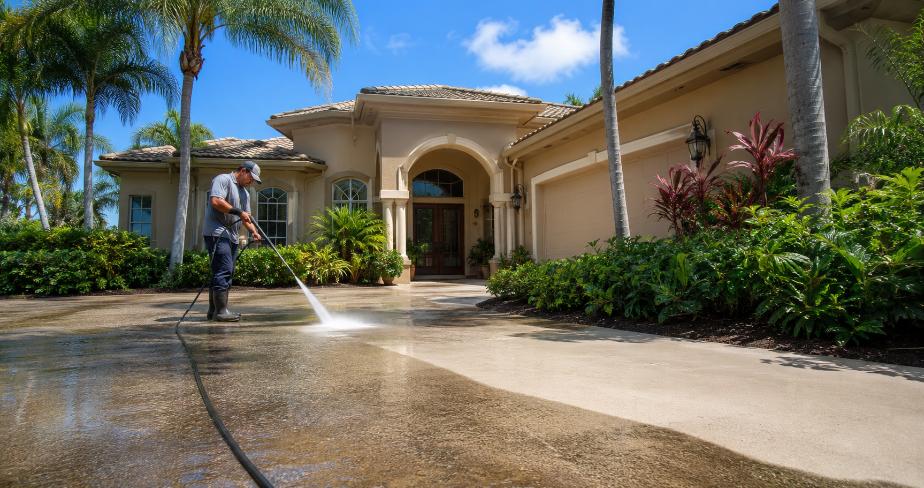
If you are planning to have your driveway, home exterior, roof or patio pressure washed in Orlando, one of the first questions you probably have is how much it is going to cost. The honest answer is that pricing varies significantly depending on what you are cleaning. How large the area is and the condition of the surface. This guide gives you a straightforward breakdown of pressure washing costs in Orlando, FL for 2026 based on real local pricing data and our experience as a pressure washing company that has been serving Central Florida since 1989. Pressure Washing Cost in Orlando Quick Summary Most pressure washing jobs in Orlando fall within these ranges: Service Typical Price Range Average Cost Driveway (standard) $100 – $250 $175 House exterior (single-story) $200 – $400 $300 House exterior (two-story) $350 – $600 $475 Patio or pool deck $100 – $300 $190 Roof (soft wash) $250 – $600 $400 Fence (per linear foot) $1 – $3/ft $150 avg Sidewalk or walkway $75 – $200 $130 Full exterior package (house + driveway + walkways) $400 – $750 $550 These figures reflect professional pressure washing with proper equipment – not DIY rental machines. Actual quotes will vary based on your property’s size, condition and specific requirements. The only accurate price is one based on an in-person assessment of your property. Pressure Washing Cost Per Square Foot in Orlando Many pressure washing companies in Orlando price their work by the square foot. Here is what to expect: Surface Type Price Per Sq Ft Notes Concrete (driveway, sidewalk, patio) $0.15 – $0.25 Standard rate for flat concrete House exterior / siding $0.20 – $0.35 Stucco may be higher Vinyl siding $0.16 – $0.39 Requires careful pressure control Brick $0.08 – $0.31 Lower pressure recommended Wood deck or fence $0.25 – $0.40 Needs lower pressure to avoid damage Roof (soft wash) $0.30 – $0.75 Specialized method — not standard pressure Note that per-square-foot pricing works in your favor when you have a larger area to clean. Most companies have a minimum charge of $75 to $150 regardless of job size, meaning small jobs cost more per square foot relative to the area cleaned. Hourly Rate for Pressure Washing in Orlando Some companies charge by the hour rather than by the square foot. In Orlando, professional pressure washing labor runs $75 to $200 per hour depending on the company and job complexity. Most residential pressure washing jobs take 2 to 4 hours for a standard home. If a company quotes you an hourly rate, ask them for an estimated total hours upfront so you can compare against square-foot pricing from other companies. What Factors Affect Pressure Washing Cost in Orlando? Understanding what drives pricing will help you get an accurate quote and know what to expect: Property Size The single biggest factor is square footage. A larger driveway, more linear feet of fence or a bigger home exterior all mean more time and cleaning solution. Most companies measure before quoting – be cautious of any company that gives a firm price without seeing the property. Surface Type and Material Different surfaces require different pressure levels and techniques. Concrete can handle high pressure. Stucco, wood and vinyl siding need more careful handling to avoid damage. Roofs in Florida should never be pressure washed with high pressure. They require soft washing with specialized cleaning solutions. Surface type directly affects both the time required and the equipment used, which affects cost. Level of Buildup and Staining A driveway that gets cleaned once a year is significantly faster and cheaper to clean than one that has not been touched in five years. Heavy algae, oil stains, mold buildup and mineral deposits require more passes, stronger cleaning agents and more time. In Orlando’s humid climate, surfaces that go unclean for extended periods develop heavier biological growth than in drier states. Number of Stories and Accessibility Single-story homes are straightforward. Two-story homes require extension wands or ladders, adding time and complexity. Properties with limited access, tight landscaping around the foundation or areas requiring scaffolding will cost more than open, easily accessible properties. Soft Wash vs Standard Pressure Wash Standard pressure washing uses high-pressure water to remove dirt and buildup. Soft washing uses lower pressure combined with specialized cleaning solutions. It is required for roofs, painted surfaces and some siding types that would be damaged by high pressure. Soft washing typically costs 20 to 30 percent more than standard pressure washing for the same area, because the process requires specialized chemicals and more time. Add-On Services Many Orlando pressure washing companies offer bundled services that add to the total but may save money compared to separate quotes. Common add-ons include concrete sealing after cleaning ($0.50 to $1.50 per sq ft), gutter cleaning ($75 to $200), window cleaning and post-cleaning treatments. Bundling house washing with driveway and patio cleaning almost always costs less than hiring separately for each surface. Get an Accurate Pressure Washing Estimate for Your Orlando Property Every property is different. The only way to know exactly what your job will cost is an in-person assessment. Philip White Painting and Restoration LLC provides free estimates for all pressure washing projects in Orlando, FL and surrounding areas. Call: (407) 860-5846 Free Estimate: philipwhitepainting.com/free-estimate/ Pressure Washing Cost by Surface Type, Orlando Breakdown Driveway Pressure Washing Cost in Orlando A standard concrete driveway in Orlando runs $100 to $250 for professional pressure washing. For a typical 400 to 600 square foot driveway, most homeowners pay $150 to $200. Larger driveways (800+ sq ft) or those with heavy oil staining or significant algae growth will run $200 to $300 or more. Orlando driveways develop algae and mildew much faster than in drier climates because of the humidity. Many homeowners find that cleaning once a year keeps driveways looking good and prevents the buildup from becoming more expensive to remove. House Exterior Pressure Washing Cost in Orlando For a standard single-story home in Orlando, professional house washing costs $200 to $400. Two-story
How Long Does Exterior Paint Last in Florida? (And What Makes It Fail Early)
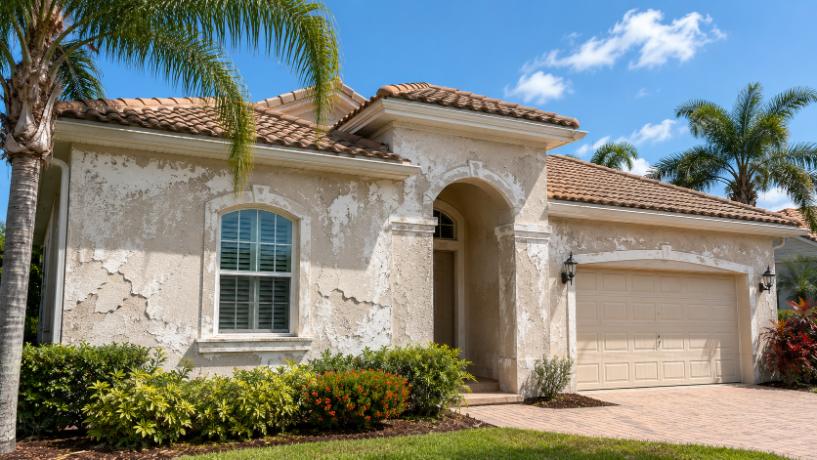
If you have recently had your Orlando home painted or if you are trying to decide whether it is time to repaint, understanding how long exterior paint actually lasts in Florida is one of the most useful things you can know. The honest answer is that Florida is one of the harshest environments for exterior paint in the United States. Paint that would last 10 to 15 years in a moderate climate may last half that time in Central Florida. But with the right paint, proper preparation and correct application timing, a professional paint job in Orlando can realistically last 7 to 10 years or more. Here is everything you need to know – from what drives paint failure in Florida to the warning signs that tell you it is time to repaint. How Long Does Exterior Paint Last in Florida? The Short Answer For most Florida homes with a professional paint job using quality materials: These are realistic figures for professionally applied paint with proper surface preparation. Paint applied without adequate prep or using budget materials, will fail significantly sooner in Florida’s climate. Paint Type Moderate Climate Florida (with proper prep) Florida (poor prep) Standard exterior latex 7–10 years 4–6 years 2–3 years 100% acrylic premium (Duration, Aura) 10–15 years 7–10 years 3–5 years Elastomeric coating (stucco homes) 10–15 years 10–15 years 4–6 years Builder-grade paint 4–6 years 2–3 years 1–2 years Why Exterior Paint Fails Faster in Florida Than Other States Florida’s climate creates a combination of conditions that are uniquely hard on exterior paint. Understanding these helps explain why paint that seems fine in spring can start showing problems by the following year. Intense UV Radiation Central Florida receives over 2,600 hours of sunshine per year, among the highest in the continental United States. UV radiation breaks down paint binders and pigments at the molecular level, causing fading, chalking and loss of adhesion. This process happens year-round in Florida, not just in summer, because the sun angle stays relatively high even in winter. This is why paint rated specifically for UV resistance, like 100% acrylic products lasts significantly longer in Florida than standard latex formulations. Year-Round Humidity Relative humidity in Orlando regularly exceeds 70 percent for most of the year. High ambient humidity slows drying time, prevents proper curing if paint is applied at the wrong time and creates ongoing moisture stress on the paint film. Moisture that gets behind the paint film, through cracks, gaps or poorly sealed surfaces, causes blistering, peeling and eventually structural damage. Heavy Rainfall and Storm Season Orlando receives an average of 54 inches of rainfall annually, concentrated in a five-month rainy season from June through October. This rainfall drives water horizontally against home exteriors during storm events, testing every gap, crack and seam. Paint and caulking that cannot handle this level of moisture exposure fail prematurely. Temperature Cycling Despite Florida’s reputation for warmth, temperatures in Orlando can range from below 40 degrees Fahrenheit in winter to over 95 degrees in summer. This thermal cycling causes exterior surfaces, particularly stucco, to expand and contract repeatedly. Paint that lacks sufficient flexibility cracks and separates from the substrate over time. This is one of the primary reasons elastomeric coatings are recommended for stucco homes in Florida. They are formulated to stretch and flex with the substrate rather than cracking under thermal stress. Mold and Mildew Growth Florida’s combination of heat and humidity creates near-ideal conditions for mold and mildew to grow on exterior surfaces. Paint that does not contain mildewcide additives develops biological growth within months in many parts of Orlando. Mold and mildew are not just cosmetic They break down the paint film over time and can work their way into the substrate beneath. The Single Biggest Factor: Surface Preparation If there is one thing that determines how long exterior paint lasts in Florida more than any other factor, it is surface preparation. A properly prepared surface – pressure washed clean, all loose paint scraped back to stable substrate, cracks filled and repaired, bare areas primed, all gaps and penetrations caulked, gives paint the adhesion it needs to last. Skip these steps and even the most expensive paint will fail early. We see this consistently in our restoration work. Homes where paint has peeled or failed within two or three years almost always have one of the same underlying causes: Proper preparation adds time and cost to an exterior paint job. It is also the reason some quotes are significantly lower than others. When you see a dramatically low quote for exterior painting, the first question to ask is what is included in the surface preparation. How Paint Quality Affects Lifespan in Florida Premium 100% Acrylic Paints Products like Sherwin-Williams Duration Exterior, Sherwin-Williams Emerald Exterior and Benjamin Moore Aura Exterior are formulated specifically to perform in demanding climates. They contain higher concentrations of acrylic resin, UV-resistant pigments and mildewcide additives. In Florida, these products consistently outlast standard latex by 3 to 5 years when properly applied. The cost difference between premium and standard paint is typically $20 to $40 per gallon. On a standard Orlando home requiring 15 to 20 gallons, this is a $300 to $800 difference in materials, a fraction of the total job cost and worth every dollar for the extended lifespan. Elastomeric Coatings for Stucco For stucco homes – which represent the majority of residential properties in the Orlando area, elastomeric coatings offer the best combination of longevity and protection. Applied at 10 to 20 mils thickness (compared to 1 to 2 mils for standard paint), elastomeric coatings bridge hairline cracks, flex through temperature cycles and create a fully waterproof barrier. A properly applied elastomeric coating on a stucco home in Orlando can realistically last 10 to 15 years. This makes it the most cost-effective option over the long term for stucco construction, despite a higher upfront cost than standard paint. Builder-Grade and Budget Paints Budget exterior paints – including the paint applied to most new construction homes
Exterior House Painting Cost in Orlando, FL 2026 Pricing Guide
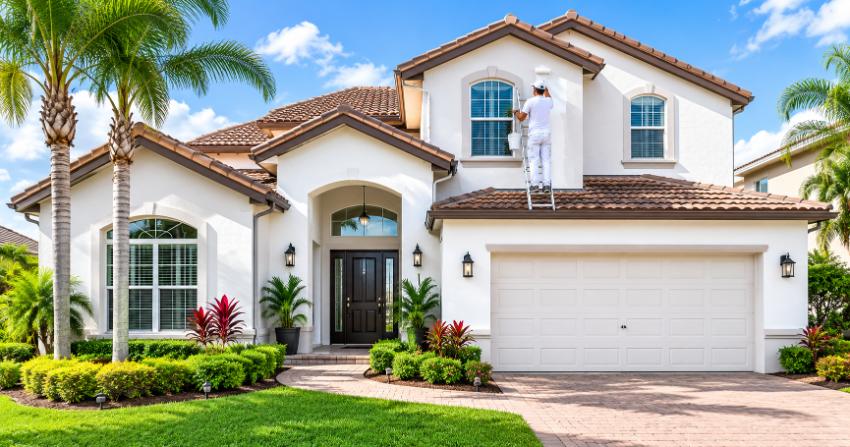
If you are planning to repaint the exterior of your Orlando home, one of the first questions you probably have is how much it is going to cost. The answer depends on several factors. The size of your home, the condition of the existing paint, the type of surface and the quality of materials used. This guide gives you an honest, real-world breakdown of exterior painting costs in Orlando, FL for 2026 based on what we see every day as a local painting company with over 37 years of experience in Central Florida. Exterior Painting Cost in Orlando Quick Overview For most standard homes in the Orlando area, exterior painting costs range from $1,500 to $6,000. Here is a general breakdown by home size: Home Type / Size Low Estimate Average High End Small home (under 1,500 sq ft) $1,200 $1,800 $2,500 Medium home (1,500–2,500 sq ft) $1,800 $2,800 $4,000 Large home (2,500–3,500 sq ft) $2,800 $4,200 $6,000 Extra large / two-story (3,500+ sq ft) $4,500 $6,500 $9,000+ These ranges reflect the full cost of a professional exterior paint job including surface preparation, primer, two coats of paint, trim work, and cleanup. They do not include significant structural repairs, which are priced separately. What Factors Affect Exterior Painting Cost in Orlando? No two homes are the same and neither are the quotes. Here are the main factors that determine where your project lands within the price range: Factor How It Affects Cost Home size Larger square footage means more paint, more time, and higher cost Surface type Stucco requires more prep and specialized coatings than vinyl siding Condition of existing paint Heavy peeling, chalking, or damage significantly increases prep time and cost Number of stories Two-story homes require scaffolding or extension ladders adds labor cost Paint quality Premium paints (Sherwin-Williams Duration, Benjamin Moore Aura) cost more but last longer Number of colors Multiple colors for body, trim, and accents adds time and materials cost Stucco crack repairs Significant stucco repair adds $200–$800+ depending on extent of damage Trim and detail work More trim elements (shutters, columns, doors, garage) add to total Why Exterior Painting Costs More in Florida Than in Other States If you have had your home painted in a different state and are surprised by Florida pricing, there are real reasons why exterior painting in Orlando costs more than in moderate climates. Florida Paint Standards Are Higher Standard exterior latex paint that performs well in a moderate climate will fade, chalk, and peel within 3 to 5 years in Orlando’s heat and UV intensity. Professional contractors in Florida use premium-grade paints Sherwin-Williams Duration or Emerald Exterior, Benjamin Moore Aura Exterior or elastomeric coatings for stucco that cost significantly more per gallon but last significantly longer. Stucco Preparation Is Labor-Intensive The majority of Orlando homes are stucco construction. Stucco develops hairline cracks from Florida’s heat cycles and requires thorough crack repair, elastomeric patching compound and bonding primer before any paint is applied. This prep work adds meaningful time and cost compared to painting wood or vinyl siding. Surface Preparation Cannot Be Skipped A proper exterior paint job in Florida requires pressure washing at 2,500 to 3,000 PSI, scraping all loose paint back to a stable surface, caulking every gap and penetration, priming all bare and repaired areas and allowing proper dry time between coats. Companies that skip these steps quote lower prices. Their results also fail faster which costs the homeowner more in the long run. How to Get an Accurate Exterior Painting Quote in Orlando Online calculators and per-square-foot estimates give you a rough starting point, but they are not accurate. The only way to get a real number is an in-person assessment of your specific property. When you call us for a free estimate, here is what we do: We do not give ballpark quotes over the phone. A written estimate after an in-person assessment is the only honest way to price an exterior painting job. How to Compare Exterior Painting Quotes in Orlando If you are getting multiple quotes which is always a reasonable thing to do here is what to look for to make sure you are comparing apples to apples: A quote that is significantly lower than others usually means something is being left out either in materials, preparation, or coverage. In Florida, shortcuts in exterior painting show up quickly. Is Exterior Painting Worth the Investment in Orlando? Yes and the data supports it. Here is why exterior repainting is one of the highest-return home improvement investments for Orlando homeowners: For most Orlando homeowners, the question is not whether to repaint, it is when. And the right answer is before the paint fails, not after. How Long Does Exterior Paint Last in Orlando? With quality paint and proper preparation, a professional exterior paint job in Orlando should last 7 to 10 years. Here is what affects lifespan: Get an Accurate Estimate for Your Orlando Home Every home is different. The only way to know exactly what your exterior painting job will cost is to have us assess your property in person. We provide free, no-obligation estimates and can usually schedule within 24 to 48 hours. Call: (407) 860-5846 Free Estimate | philipwhitepainting.com/free estimate/ Frequently Asked Questions, Exterior Painting Cost in Orlando How much does it cost to paint a 2,000 square foot house exterior in Orlando? For a 2,000 square foot home in Orlando, expect to pay between $2,500 and $4,500 for a professional exterior paint job including surface preparation, primer, two coats of paint and trim work. The final number depends on the condition of the existing paint, the surface type (stucco vs siding), and the paint product selected. What is the cheapest time of year to get exterior painting in Orlando? The best time to paint in Orlando is October through May before the rainy season. During this window, humidity is lower and paint cures properly. Demand is also somewhat higher in spring, so booking in the fall or early winter
Does Water Damage Always Lead to Mold? The Truth for Florida Homeowners
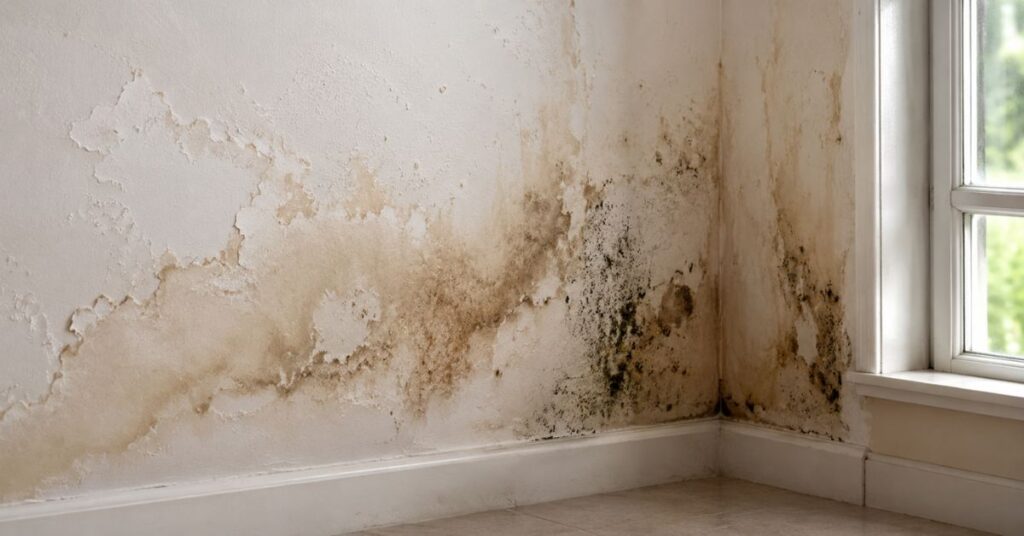
After water damage in your home, one of the first questions people ask is whether mold is going to be a problem. The honest answer is: it depends. And in Florida, the odds are not in your favor if you wait. Mold does not always follow water damage. But in Central Florida’s warm, humid climate, the conditions that allow mold to grow are almost always present. The difference between a mold problem and no mold problem usually comes down to one thing: how quickly you act. Here is everything Florida homeowners need to know about water damage and mold. How Mold Grows After Water Damage Mold is a fungus that reproduces by releasing microscopic spores into the air. These spores are everywhere, including in your home right now. Under normal, dry conditions they are harmless. But introduce moisture and the right temperature, and those spores find a surface to land on and start growing. Mold needs three things to grow: Your home already provides the food source and the temperature. After water damage, it also provides moisture. That is why mold after water damage is so common, especially in Florida. How Long Does It Take for Mold to Grow After Water Damage? This is the most important number every Florida homeowner should know: mold can begin growing within 24 to 48 hours of water exposure. That does not mean you will see visible mold in 24 hours. Mold typically becomes visible to the naked eye after it has been growing for a week or more. By the time you see it, it has already colonized the surface and may have spread to nearby materials. The 24 to 48 hour window is the critical period. If water damage is identified and properly dried within that time frame, mold growth can usually be prevented entirely. Wait longer and you are likely dealing with mold remediation on top of water damage restoration. Why Florida Is a High-Risk Environment for Mold Florida’s climate creates near-ideal conditions for mold growth. Here is why Orlando homeowners face higher risk than most: What might be a minor water incident in a dry climate can become a mold problem within days in Orlando. This is not an exaggeration. It is something we see regularly in our restoration work. Where Does Mold Grow After Water Damage? Mold does not just grow on wet surfaces. It follows moisture wherever it travels, which means it often grows in places you cannot easily see: This is why professional moisture detection is so important after water damage. Surface drying does not address moisture trapped inside the structure, and that hidden moisture is where mold takes hold. Can You Prevent Mold After Water Damage? Yes, in most cases mold after water damage is preventable. The key is professional, thorough drying within the first 24 to 48 hours combined with antimicrobial treatment. Here is what effective mold prevention after water damage looks like: When all of these steps are completed properly and quickly, mold growth can be stopped before it starts. What If Mold Has Already Grown? If you are reading this after discovering mold following water damage in your home, do not panic. Mold is treatable. But it does need to be handled correctly. Small surface mold on non-porous materials like tile can sometimes be cleaned with an EPA-registered mold cleaner. However, mold that has grown into porous materials like drywall, wood, insulation, or carpet cannot simply be cleaned off the surface. These materials typically need to be removed and replaced. Attempting to clean mold yourself without proper protective equipment and containment procedures can spread spores throughout your home, making the problem worse. For anything beyond a very small surface mold spot, professional mold remediation is the right call. Philip White Painting and Restoration LLC handles both water damage restoration and mold remediation in Orlando. If mold has developed from water damage in your home, we can assess the extent of the problem and handle full remediation. Signs Mold Is Growing in Your Home After Water Damage If you are not sure whether mold has developed after a water event, watch for these signs: If you notice any of these after water damage, have a professional assess the affected areas before assuming the problem has resolved on its own. The Real Cost of Ignoring Mold After Water Damage Mold remediation is significantly more expensive than mold prevention. Here is what the cost difference looks like: Beyond the financial cost, living with mold in your home is a health risk. Prolonged exposure to mold spores can cause respiratory illness, chronic headaches, fatigue, and more serious health problems in vulnerable individuals. How We Stop Mold Before It Starts in Orlando Homes When Philip White Painting and Restoration LLC responds to water damage in an Orlando home, our entire process is designed around mold prevention from the first moment we arrive. We do not just extract visible water and leave. We use professional moisture meters to find every pocket of hidden moisture, deploy industrial drying equipment that reaches inside wall cavities and under floors, apply EPA-registered antimicrobial treatments, and monitor moisture levels daily until we confirm the structure is completely dry. The goal is not just to dry your home. It is to dry your home completely so that mold never gets the chance to start. Dealing With Water Damage in Orlando? Philip White Painting and Restoration LLC provides 24/7 emergency water damage restoration and mold remediation in Orlando, FL. We stop the damage fast before mold gets the chance to start. Call Now: (407) 860-5846Free Estimate: https://philipwhitepainting.com/free-estimate/ Frequently Asked Questions How quickly does mold grow after a flood in Florida? Mold can begin growing within 24 to 48 hours of water exposure. In Florida’s warm, humid climate, this timeline can be even shorter. Getting professional drying started within the first day is the most effective way to prevent mold after flooding. Can mold grow inside walls after water damage? Yes, and this is one of
How Long Does Water Damage Restoration Take? A Complete Orlando Homeowner’s Guide
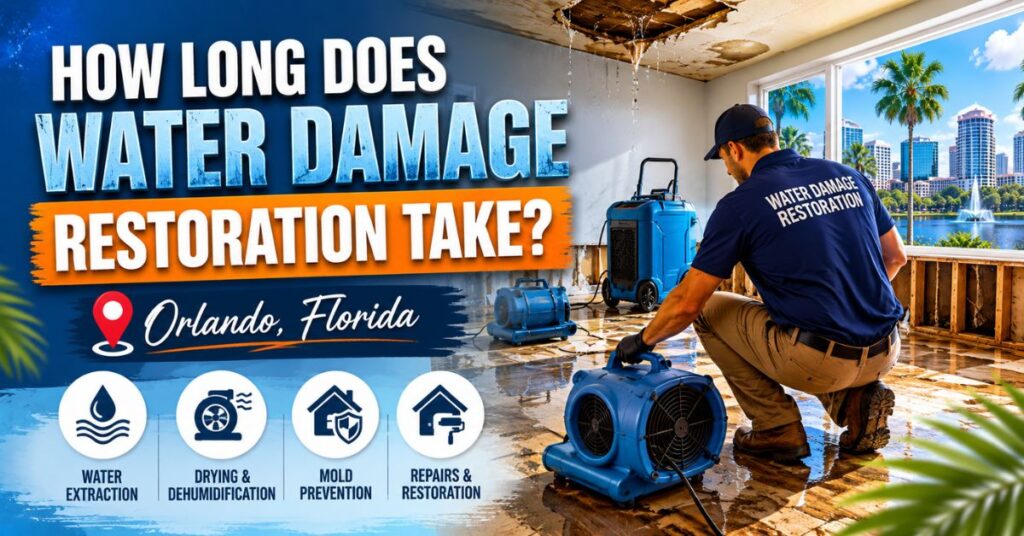
Water damage is one of those problems that can turn your day upside down in a matter of minutes. One moment everything looks normal. The next, you discover water on the floor, a ceiling stain or a leak that has already spread through part of your home. After the initial shock, most homeowners ask me the same two questions: How long is this going to take? When can my home get back to normal? The honest answer is that every situation is different. A small leak that is discovered early may only take a few days to dry and repair. A larger loss involving multiple rooms, structural damage, or mold can take several weeks. Over the past 37 years, I have helped homeowners throughout Orlando deal with every type of water damage imaginable, from simple AC condensate leaks to major storm-related losses. One thing I have learned is that the restoration timeline depends on how quickly the problem is discovered and how much moisture has spread through the home. “In my experience, the biggest mistake homeowners make is assuming the job is finished when the water is gone. Proper drying takes time, and rushing the process often leads to bigger problems later.” — Philip White, Owner, Philip White Painting and Restoration LLC In this guide, I will explain how long water damage restoration typically takes, what factors affect the timeline, and what you can expect during each stage of the restoration process. Quick Answer: How Long Does Water Damage Restoration Take? Most water damage restoration projects take anywhere from a few days to several weeks, depending on the severity of the damage. Damage Type Typical Timeline Small water leak 3–5 days Moderate water damage 5–10 days Major water damage 2–6 weeks Mold remediation projects 1–3 weeks For most Orlando homeowners, the drying process typically takes between 3 and 7 days. If repairs such as drywall replacement, flooring installation, or painting are needed, the overall project may take longer. The sooner water damage is addressed, the faster the restoration process usually goes. What Happens During Water Damage Restoration? Many homeowners hear the term “water damage restoration” but are not exactly sure what it involves. The process is much more than simply removing visible water. Proper restoration focuses on finding hidden moisture, drying building materials, preventing mold, and restoring the home to its pre-loss condition. 1) Inspection The first step is a thorough inspection. We identify the source of the water, determine how far the moisture has spread, and use professional moisture detection equipment to locate water that may be hidden behind walls, under flooring, or inside ceilings. 2) Water Extraction Once the inspection is complete, standing water is removed using professional extraction equipment. Removing water quickly helps reduce further damage and speeds up the drying process. 3) Structural Drying After the visible water is gone, the real drying process begins. Industrial air movers and dehumidifiers are placed throughout the affected areas to remove moisture trapped inside drywall, wood, flooring, and other materials. This stage is critical because hidden moisture can lead to mold growth if it is not properly addressed. 4) Repairs Once moisture levels return to normal, damaged materials can be repaired or replaced. This may include drywall, insulation, flooring, trim, cabinetry, or ceiling repairs. 5) Final Restoration The final step is restoring your home to its pre-loss condition. Depending on the extent of the damage, this may involve painting, finishing work, and rebuilding damaged areas so your home looks and functions like it did before the loss occurred. Day-by-Day Water Damage Restoration Timeline One of the biggest questions homeowners have is what actually happens each day during the restoration process. While every project is different, most jobs follow a similar timeline. Day 1: Inspection and Water Extraction The first day focuses on identifying the source of the water, inspecting the affected areas, and removing standing water. Moisture readings are taken, and drying equipment is installed to begin the restoration process as quickly as possible. Days 2–4: Active Drying During this stage, air movers and dehumidifiers run continuously. Moisture levels are monitored daily to ensure building materials are drying properly. This is often the longest part of the process because hidden moisture takes time to remove safely. Days 5–7: Final Moisture Testing Once materials appear dry, additional moisture testing is performed. The goal is to confirm that walls, flooring, and other building materials have reached acceptable moisture levels. When drying is complete, the equipment can usually be removed. Week 2 and Beyond: Repairs and Restoration If repairs are needed, this stage may include drywall replacement, painting, flooring repairs, trim installation, and other restoration work. Small projects may be completed quickly, while larger losses can take several additional weeks depending on the scope of repairs. Water Damage Restoration Timeline by Type of Water Damage Not all water damage situations are the same. The source of the water often plays a major role in determining how long the restoration process will take. A small AC leak may be resolved within a few days, while flood damage can take several weeks to fully restore. 1) AC Leak AC condensate leaks are one of the most common causes of water damage in Orlando homes. If the leak is discovered early, drying and minor repairs can often be completed quickly. Typical timeline: 3–5 days 2) Ceiling Leak Ceiling leaks are often caused by roof damage, plumbing issues, or AC problems in the attic. The timeline depends on how much moisture has spread into the drywall and insulation. Typical timeline: 5–10 days 3) Burst Pipe A burst pipe can release a large amount of water in a short period of time. Multiple rooms may be affected, and extensive drying may be required. Typical timeline: 1–3 weeks 4) Storm Damage Heavy rain and severe storms can allow water to enter through roofs, windows, and exterior walls. These projects often involve both drying and reconstruction. Typical timeline: 2–4 weeks 5) Flood Damage Flood damage is usually the
Water Damage Restoration Cost in Orlando (2026 Guide)
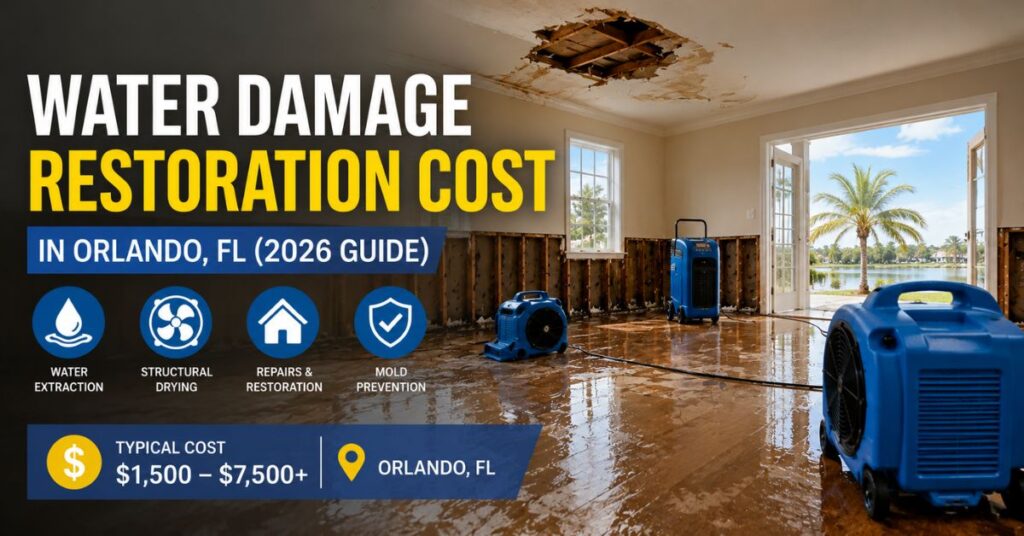
One of the first questions most homeowners ask is, “How much is this going to cost?” The answer depends on several factors, including how much water entered your home, how long the materials stayed wet and whether mold has started to grow. A small leak caught early may only require minor drying and repairs. A larger loss affecting multiple rooms can involve water extraction, structural drying, drywall replacement, flooring repairs, and repainting. I’m Philip White, owner of Philip White Painting and Restoration LLC. I have been helping Orlando homeowners restore their homes since 1989. Over the past 37 years, I have seen firsthand how acting quickly can significantly reduce the cost of water damage restoration. In this guide, I will explain the typical cost of water damage restoration in Orlando, what factors affect pricing and how you can reduce your out-of-pocket expenses. How Much Does Water Damage Restoration Cost in Orlando? Water damage restoration costs in Orlando can vary widely depending on the extent of the damage. Here are the most common price ranges homeowners can expect: Most Orlando homeowners typically pay between $1,500 and $7,500 for professional water damage restoration. The final cost depends on factors such as the size of the affected area, the type of water involved, the materials damaged, and how quickly the drying process begins. Water Damage Restoration Cost Breakdown in Orlando The cost of water damage restoration depends on the type of work your home needs. Some homes only require water extraction and drying. Others may need drywall replacement, mold remediation, flooring repairs, and repainting. The table below shows the typical price ranges we see for water damage restoration projects in Orlando. Type of Service Typical Cost Range Emergency water extraction $500 to $2,500 Structural drying $1,000 to $4,000 Drywall repair $500 to $2,500 Ceiling repair $500 to $3,000 Flooring replacement $1,500 to $10,000+ Mold remediation $1,500 to $8,000+ Full restoration and painting $3,000 to $20,000+ These are general estimates based on the size of the affected area, the materials involved and how quickly the damage is addressed. The best way to know the actual cost is to schedule a professional inspection. Water Damage Restoration Cost by Severity of Damage One of the biggest factors that affects price is how severe the damage is. A small leak discovered early usually costs much less than water damage that has spread to several rooms. 1) Minor Water Damage Minor water damage is typically limited to one small area. This may include a minor AC leak, a small plumbing leak or water around a sink or toilet. In many cases, there is little or no demolition required. Typical situations include: Estimated cost: $500 to $1,500 2) Moderate Water Damage Moderate water damage affects a larger area and often requires professional drying and partial repairs. Some drywall may need to be removed, and multiple rooms may be involved. Typical situations include: Estimated cost: $1,500 to $5,000 3) Severe Water Damage Severe water damage can affect the structure of your home and may require major repairs. This often happens after storm flooding, a major pipe burst, or a leak that went unnoticed for several days. Typical situations include: Estimated cost: $5,000 to $20,000 or more My Professional Advice In my experience, the biggest cost factor is not always the amount of water. It is how long the materials remain wet. A small leak discovered and dried immediately may cost only a few hundred dollars. The same leak left untreated for several days can lead to mold, drywall removal and thousands of dollars in additional repairs. That is why I always recommend acting as quickly as possible after water damage is discovered. Note: Call Now Water Damage Restoration Company in Orlando at (407)860-5846. Water Damage Restoration Cost by Water Category Not all water damage is the same. The type of water involved has a major impact on the cost of restoration. Cleaner water usually costs less to address, while contaminated water requires more extensive cleaning, protective equipment and disposal procedures. Category 1: Clean Water Clean water comes from a sanitary source and does not pose an immediate health risk. Common sources include: Because the water is relatively clean, restoration costs are typically lower if the damage is addressed quickly. Estimated impact on cost: Lower restoration costs Category 2: Gray Water Gray water contains contaminants that may cause illness if touched or ingested. Common sources include: These losses require additional cleaning and disinfection, which increases the cost. Estimated impact on cost: Moderate to higher restoration costs Category 3: Black Water Black water is highly contaminated and can contain harmful bacteria, viruses, and sewage. Common sources include: This type of water damage requires strict safety procedures, disposal of affected materials, and extensive sanitizing. Estimated impact on cost: Highest restoration costs Orlando-Specific Factors That Affect Water Damage Restoration Cost Water damage restoration costs in Orlando are often higher than homeowners expect because of Florida’s unique climate and insurance considerations. 1. High Humidity Increases Drying Time Orlando’s humidity slows the drying process. Materials such as drywall, wood and insulation may stay wet longer, requiring more equipment and additional monitoring. 2. AC Condensate Leaks Are Very Common One of the most frequent causes of water damage in Orlando homes is a clogged AC condensate line. These leaks often go unnoticed until ceiling stains, wet drywall, or mold appear. 3. Summer Storms and Hurricanes Heavy rain, tropical storms, and hurricanes can cause roof leaks, window intrusion, and flooding. Storm-related water damage often affects larger areas and may require extensive repairs. 4. Mold Growth Happens Quickly Warm temperatures and high humidity create ideal conditions for mold. If water damage is not dried properly, mold remediation may add significantly to the total cost. 5. Florida Insurance Deductibles Many homeowners policies include deductibles that affect out-of-pocket costs. Depending on your policy, you may be responsible for part of the restoration cost before insurance coverage begins. Water Damage Restoration Cost by Room The final cost also depends on which