



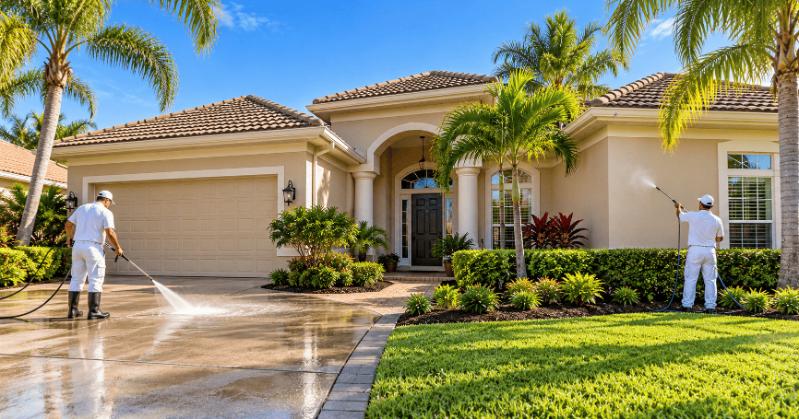
A homeowner calls and says, “I want my house pressure washed.” We ask a few questions and half the time the right answer is not pressure washing at all. It is soft washing. The two terms get used as if they mean the same thing, but they are different methods, and using the wrong one on the wrong surface is one of the most common ways Orlando homes get damaged during cleaning.
The short answer: use pressure washing for hard, durable surfaces like concrete driveways and sidewalks. Use soft washing for roofs, stucco, painted walls, screens and anything that high pressure can strip, crack or push water into. Most Orlando homes need both.
This guide explains the difference, shows which method fits each surface and covers what Florida’s humidity, algae and rust stains mean for your cleaning choices. We have been serving Orlando homeowners since 1989 with painting, restoration and cleaning, so we see the damage that wrong cleaning causes first-hand.
Why This Choice Matters More in Orlando
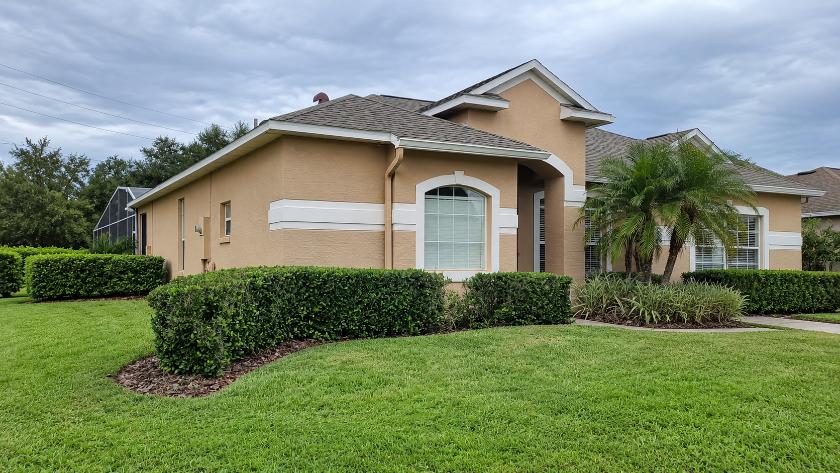
Central Florida is hard on exteriors. Heat, humidity, daily summer rain and shade from oaks and palms create the perfect conditions for algae, mildew and mold. That is why Orlando homes get dirty faster than homes in drier climates.
But the same conditions are why cleaning mistakes cost so much here:
- Stucco and block hold moisture. Forcing water into them can lead to hidden dampness and mold. See our guide on signs of hidden water damage.
- Roofs are covered in algae, not just dirt. Blasting them can strip granules and shorten roof life.
- Fresh paint is at risk. High pressure can chip or lift paint that is already aging in the Florida sun. See how long exterior paint lasts in Florida.
- Cleaning that only removes the stain, not the growth, does not last. The green or black comes back quickly in humid weather.
Step 1: What Pressure Washing Is (and What It Is Really For)
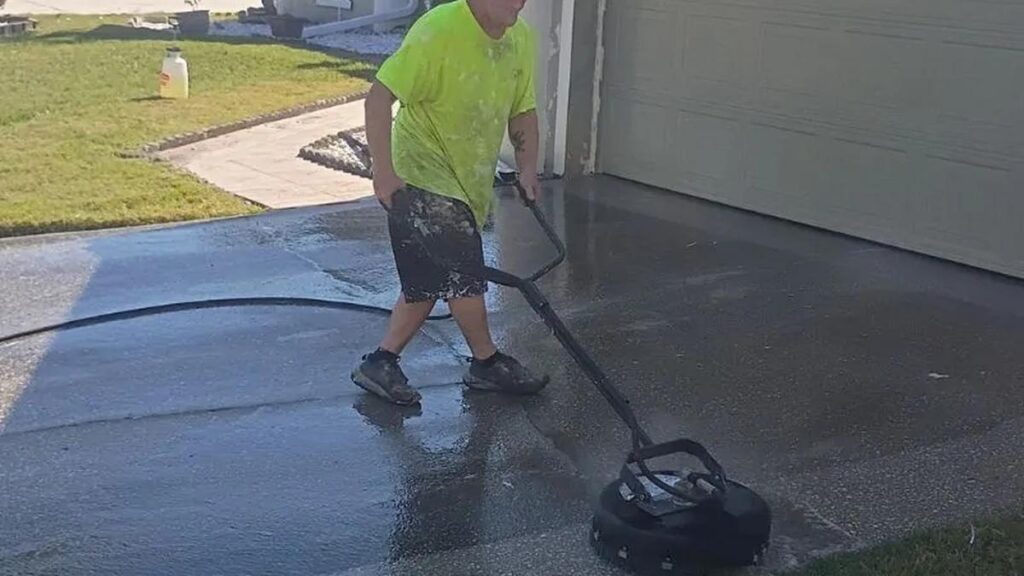
Pressure washing uses a high-pressure stream of water, sometimes with detergent, to knock dirt and grime off a surface. The force does the work.
It is the right tool when the surface is hard, sealed and can take the force:
- Concrete driveways, sidewalks and curbs
- Garage floors and loading areas
- Brick and concrete patios (with the right pressure and nozzle)
- Heavy oil, tire marks and ground-in dirt on hard surfaces
Pressure washing gives instant visual results on these surfaces. The risk is that the same force that lifts dirt can also gouge, etch or strip anything softer.
Step 2: What Soft Washing Is (and Why Florida Needs It)
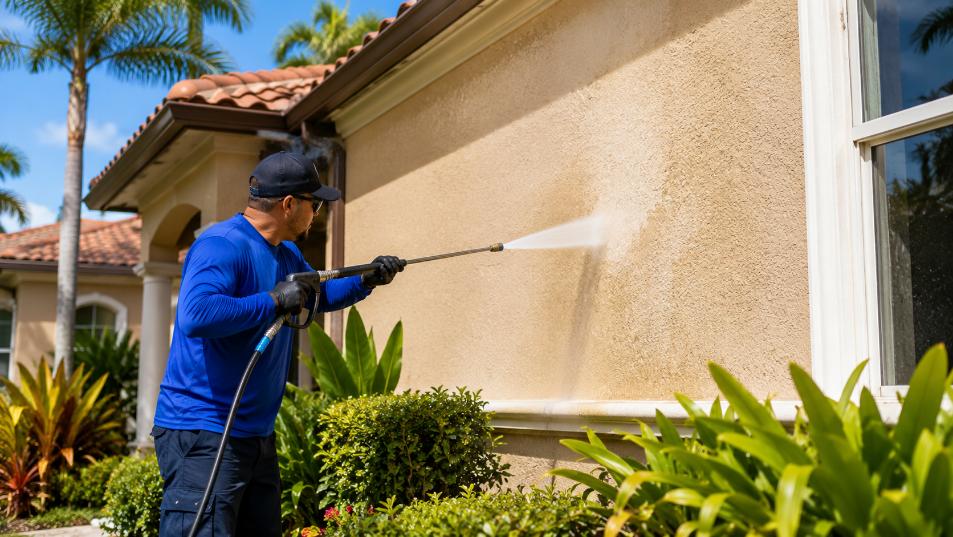
Soft washing uses low water pressure (generally under about 500 PSI, similar to a garden hose) together with a cleaning solution that kills algae, mildew and mold at the source. The solution does the work, not the force. The surface is then rinsed gently.
This matters in Florida for one reason: most of what makes Orlando homes look dirty is living growth. Black streaks on roofs, green film on north-facing walls and mildew on stucco are organisms. High pressure can remove the visible surface, but it often leaves roots behind, so the growth returns fast. Soft washing treats the cause, which is why results usually last longer.
Soft washing is the right method for:
- Shingle and tile roofs (see our soft roof washing service)
- Stucco and painted exterior walls
- Siding, soffits, fascia and trim
- Screen enclosures, lanais and window screens
- Wood fences, decks and garage doors
Step 3: Surface-by-Surface Guide for Orlando Homes
Use this as a quick reference. Final choices depend on the condition of the surface, so a professional inspection is always best.
| Surface | Best Method | Why |
|---|---|---|
| Concrete driveway and sidewalks | Pressure washing | Hard, durable surface. Handles high pressure well. |
| Pavers | Pressure washing with care, plus soft wash for algae | Pressure can wash out joint sand. Plan to re-sand, and consider sealing. |
| Stucco | Soft washing | Porous. High pressure can erode it and force water behind it. |
| Painted exterior walls | Soft washing | High pressure can chip or lift paint. Cleaning before repainting is a key step. |
| Shingle roof | Soft washing only | Pressure strips granules. Shingle makers advise against it. |
| Concrete or clay tile roof | Soft washing | Pressure can crack or loosen tiles and wear coatings. |
| Pool deck and lanai | Depends on the surface | Bare concrete handles pressure. Coated or painted decks need gentler cleaning. |
| Screen enclosure and screens | Soft washing | Easily torn or stretched. |
| Wood fence and deck | Low pressure or soft washing | Wood splinters and fuzzes under high pressure. |
| Windows, doors and trim | Soft washing | Pressure can damage seals and let water in. |
Step 4: What You Are Actually Cleaning in Florida
Before choosing a method, it helps to know what you are dealing with. These are the most common exterior problems we see on Orlando homes:
- Black streaks on the roof. Usually algae. Needs soft washing, not pressure. This is common on shaded roof slopes.
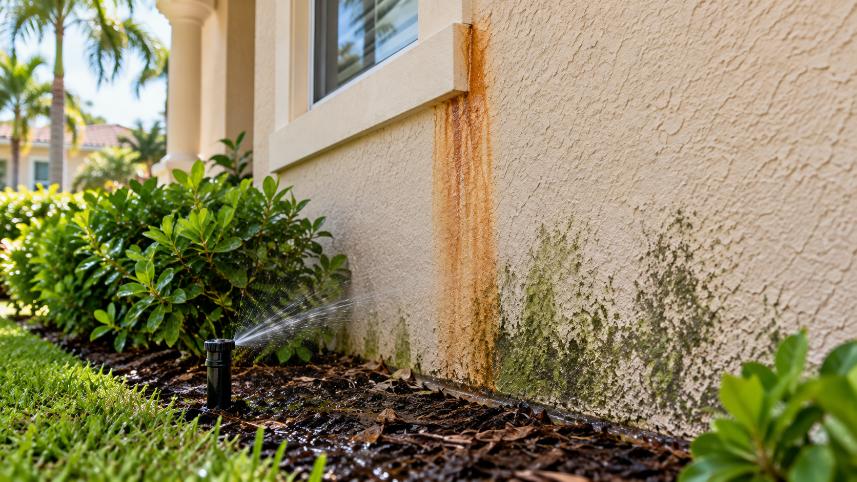
- Green or gray film on walls. Algae and mildew, especially on shaded and north-facing sides.
- Black spots on stucco, soffits and trim. Mildew or mold growth.
- Orange or rust stains. Often caused by irrigation or well water. Rust is a mineral stain, not dirt, and usually needs a dedicated rust treatment instead of just more pressure.
- Oil and grime on concrete. Handled well by pressure washing.
- Pollen and dust. Rinses off easily with low pressure.
A good contractor identifies the stain first and then chooses the method and solution. If the person quoting your job does not ask what the stain is, be careful.
Step 5: What Can Go Wrong With Too Much Pressure
High pressure is not harmless. Common damage we are called in to fix includes:
- Stripped roof granules and cracked tiles
- Etched or pitted stucco and gouged wood
- Chipped, peeling or lifted paint
- Torn screens and bent window frames
- Washed-out paver joint sand and uneven pavers
- Water forced behind siding, stucco or window seals. This is the most serious one. The wall looks clean, but moisture is trapped inside. If you notice musty smells, stains or bubbling paint after a wash, read can water damage lead to mold and call us.
Because we handle water damage restoration as well as painting and cleaning, we understand how a bad wash can turn into a bigger problem. That is why we match the method to the surface.
Step 6: How a Professional Soft Wash Works
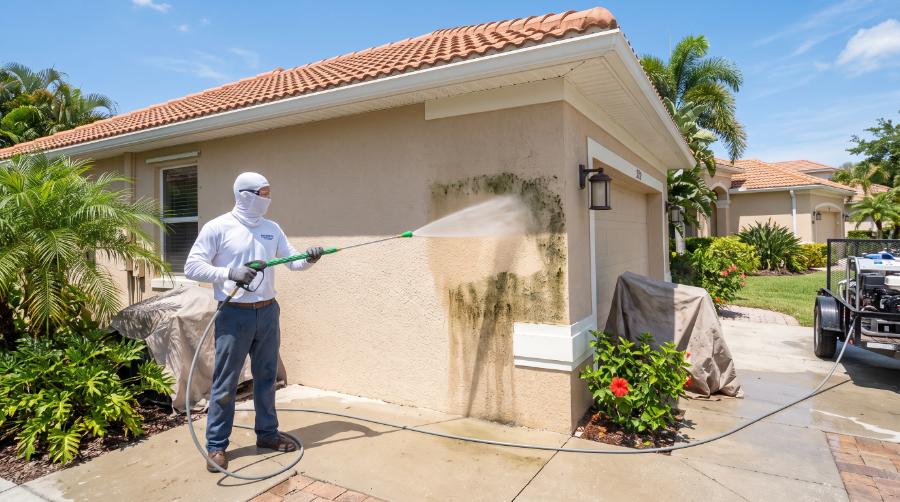
Every company has its own process, but a proper soft wash generally follows these steps:
- Inspect the surface. Check roof or wall condition, stain type, loose materials and damage.
- Protect the surroundings. Wet down and cover plants, and protect outlets, light fixtures and furniture.
- Apply the cleaning solution. A low-pressure application of a cleaner matched to the growth and surface.
- Let it work. The solution needs time to break down the algae and mildew.
- Rinse gently. A low-pressure rinse removes the residue.
- Rinse plants and the surrounding area. Final check for missed spots.
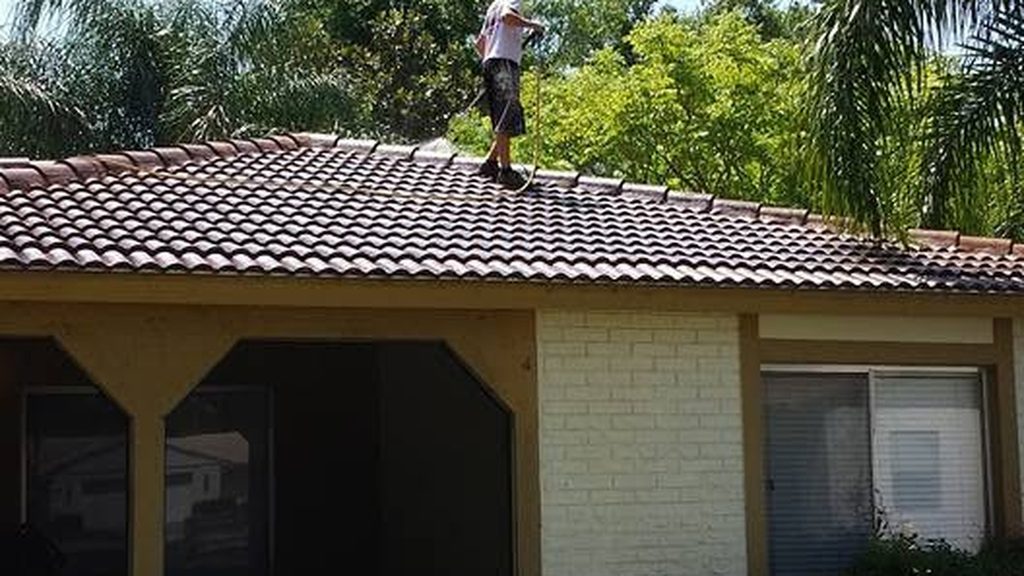
For a roof, the work should also be done by someone trained and insured for roof access. This is not a job to attempt on a ladder.
- Not sure which method your home needs?Philip White Painting and Restoration LLC offers both pressure washing and soft roof washing in Orlando. We inspect first, tell you honestly what your home needs and give you a free estimate with no obligation. Call (407) 860-5846 Free Estimate
Step 7: How Often Should You Clean the Outside of Your Home in Orlando?
There is no single schedule, because it depends on shade, tree cover, irrigation spray and how close the home is to water. As a general guide:
- Driveways and walkways: clean when they look dingy or become slippery.
- Walls, stucco and screens: many Orlando homes benefit from a cleaning every year or two. Shaded or damp areas may need it more often.
- Roofs: clean when streaks appear. Do not wait until the growth is heavy, and avoid repeated aggressive cleaning.
A yearly check of the north and shaded sides of your home is a simple way to catch growth early.
Step 8: Timing Your Wash Around Painting
If you plan to repaint, cleaning comes first, and timing matters:
- Clean 2 to 3 days before painting so the surface has time to dry fully. Stucco and masonry hold moisture, and paint over damp walls can blister and peel.
- Use soft washing on stucco before painting so the paint bonds to a clean surface without damaging it.
- Treat mildew before you paint. Painting over it does not stop it.
- Pick the right season. Read our guide to the best time to paint your house in Orlando, and see our full process in how to paint a stucco home in Orlando.
Booking cleaning and painting with one company means one schedule and one team responsible for the finished result.
Common Cleaning Mistakes in Orlando (And How to Avoid Them)
| Mistake | Why It Happens and How to Avoid It |
|---|---|
| Pressure washing a shingle or tile roof | Strips granules and can crack tiles. Use soft washing only. |
| Using high pressure on stucco | Erodes the surface and can force water inside. Use soft washing or very low pressure. |
| Blasting painted walls | Chips and lifts paint. Soft wash, then repaint if needed. |
| Only removing the stain, not the growth | The algae returns quickly. Use a method that treats the source. |
| Treating rust stains like dirt | Rust is a mineral stain and needs the right treatment. |
| Washing right before painting | Wet walls trap moisture. Allow the surface to dry fully. |
| Climbing on the roof to DIY | Serious fall risk. Hire a trained, insured professional. |
| Hiring on price alone | The cheapest quote often means the wrong method. Ask what they will use and why. |
DIY vs Professional Cleaning in Orlando: An Honest Assessment
When DIY Makes Sense
Cleaning a small concrete patio or walkway with a rented pressure washer is a reasonable DIY job. Use the widest tip, stay a consistent distance from the surface and keep the spray away from windows, screens and doors.
Where Professional Cleaning Is Worth It
Roofs, stucco, painted walls, screen enclosures and multi-story homes are best left to a trained crew. They have the equipment, the right solutions and the experience to avoid damage. Roof work in particular carries real fall risk.
Also, remember that rented machines and consumer products vary widely in strength. A machine that is too strong can do harm in seconds.
What Affects the Cost of Cleaning?
Price depends on the size of the area, the surface type, how heavy the buildup is, how many stories the home has, access and any special treatments such as rust removal or sealing. Because soft washing and pressure washing need different equipment and products, they are priced differently.
For typical ranges and what drives the price, see our pressure washing cost guide for Orlando.
Frequently Asked Questions: Pressure Washing vs Soft Washing
What is the difference between pressure washing and soft washing?
Pressure washing uses high water pressure to blast dirt off hard surfaces. Soft washing uses low pressure and a cleaning solution to kill algae, mildew and mold and rinse them away gently. Soft washing is gentler on delicate surfaces and tends to last longer on surfaces with living growth.
Can you pressure wash stucco?
It is risky. High pressure can erode stucco and force water behind it. Most stucco homes in Florida are better cleaned with soft washing or very low pressure.
Is soft washing better than pressure washing?
Not always. It is better for roofs, stucco, painted surfaces and anything delicate. Pressure washing is better for hard surfaces like concrete driveways. The right choice depends on the surface.
Can you pressure wash a roof in Florida?
It is not recommended. High pressure can strip shingle granules and damage tiles. Soft washing is the standard, safer approach for roofs.
Will soft washing damage my plants?
A careful crew protects landscaping by wetting plants beforehand, controlling the solution and rinsing afterward. Ask your contractor how they protect plants.
How long does a soft wash last in Orlando?
It varies with shade, humidity, tree cover and sprinkler spray. Soft washing treats the growth itself, so it usually lasts longer than a surface-only cleaning, but Florida’s humidity means growth can return over time.
Should I clean my house before painting?
Yes. Painting over dirt, chalking or mildew leads to poor adhesion. Clean first, let the surface dry fully and repair any damage before painting.
How do I get a free estimate for cleaning in Orlando?
Call Philip White Painting and Restoration LLC at (407) 860-5846 or visit . We serve Orlando, Winter Garden, Windermere, Ocoee, Apopka, Maitland, Winter Park area neighbors, Lake Mary, Longwood, Oviedo, Casselberry, Altamonte Springs and Kissimmee.
The Bottom Line
Pressure washing and soft washing are not rivals. They are tools for different surfaces. Use pressure washing on hard concrete, and use soft washing on roofs, stucco, painted walls, screens and anything that high pressure can damage. In Orlando’s humid climate, treating the algae and mildew itself, rather than just blasting the surface, gives longer-lasting results and protects your paint, your roof and your walls.
If you are not sure which your home needs, we will look at it and tell you. Call Philip White Painting and Restoration LLC at (407) 860-5846. We have served Orlando since 1989, and we offer free estimates with no pressure and no obligation.
Philip White Painting and Restoration LLC | 440 Santiago Ave, Orlando, FL 32807 | IICRC Certified | BBB Accredited A+ | Licensed and Insured
