




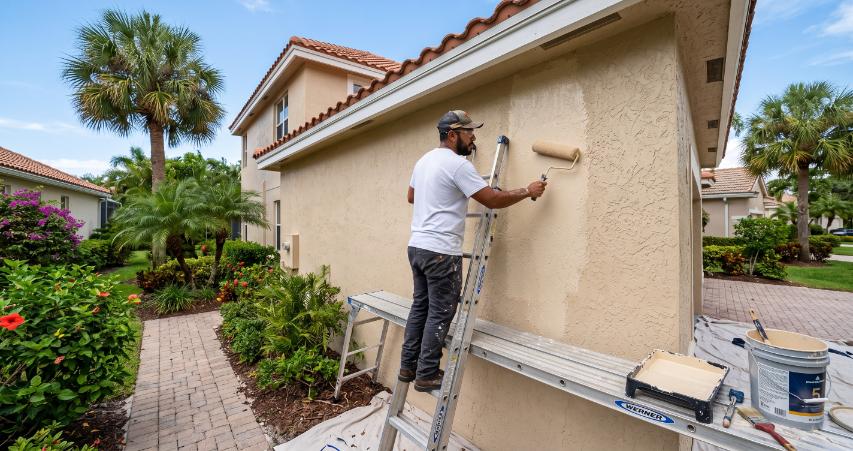
Most homes in the Orlando area are stucco construction. If you have lived here for any length of time, you know what the exterior of a typical Central Florida home looks like — that textured cement-like surface that covers the vast majority of houses built here over the past five decades.
What many Orlando homeowners do not know is that painting stucco is meaningfully different from painting wood siding, fiber cement or brick. Stucco has specific requirements at every stage, from crack assessment and repair to product selection and application timing. Done correctly, a stucco paint job in Florida lasts 7 to 15 years. Done incorrectly, it fails within 2 to 3 years.
This guide covers the complete process for painting a stucco home in Orlando the right way — based on 37 years of painting stucco homes throughout Central Florida.
Why Stucco Is Different From Other Exterior Surfaces
Stucco is a cement-based plaster applied in layers over a wire mesh (lath) attached to the home’s framing. Unlike wood siding or fiber cement panels, stucco is porous — it absorbs moisture, expands and contracts with temperature changes and cracks over time as the substrate beneath it moves.
In Florida’s climate, these characteristics are amplified. Orlando’s heat causes the stucco to expand during the day and contract at night. Heavy summer rainfall drives water into any crack or gap. Year-round humidity keeps moisture levels elevated in the material. These conditions create specific challenges that must be addressed before any paint is applied.
The consequences of painting stucco incorrectly in Florida include:
- Paint peeling from the surface within 1 to 3 years due to poor adhesion
- Water infiltrating behind the paint film through unrepaired cracks, causing mold growth and structural damage
- Efflorescence — white mineral deposits that push through paint as moisture migrates through the stucco
- Paint cracking as the stucco surface moves and the paint cannot flex with it
All of these problems are preventable with the right process and materials.
Step 1: Assess the Stucco Condition Before Anything Else
Before pressure washing, before buying paint, before anything else, walk the entire exterior of your home and assess the condition of the stucco. This is the most important step and the one most often skipped.
What to Look For
- Hairline cracks: Thin cracks less than 1/16 inch wide. These are common and normal in Florida stucco. They require elastomeric caulk or crack filler before painting.
- Structural cracks: Wider cracks, cracks that run diagonally from window or door corners, or cracks that have depth. These may indicate movement in the substrate and require more thorough repair.
- Hollow areas: Tap the stucco surface with your knuckles or a rubber mallet. A hollow sound indicates the stucco has separated from the lath or substrate beneath it. These areas must be removed and repaired before painting.
- Efflorescence: White, chalky, crystalline deposits on the surface. This indicates moisture moving through the stucco from inside the wall. The source of moisture must be identified and addressed before painting or it will push back through any new paint.
- Mold or algae: Dark streaks, green patches or fuzzy growth on the surface. This must be treated and killed before painting, not just painted over.
- Existing paint condition: Is the existing paint peeling, cracking or chalking? If so, the cause must be understood before repainting.
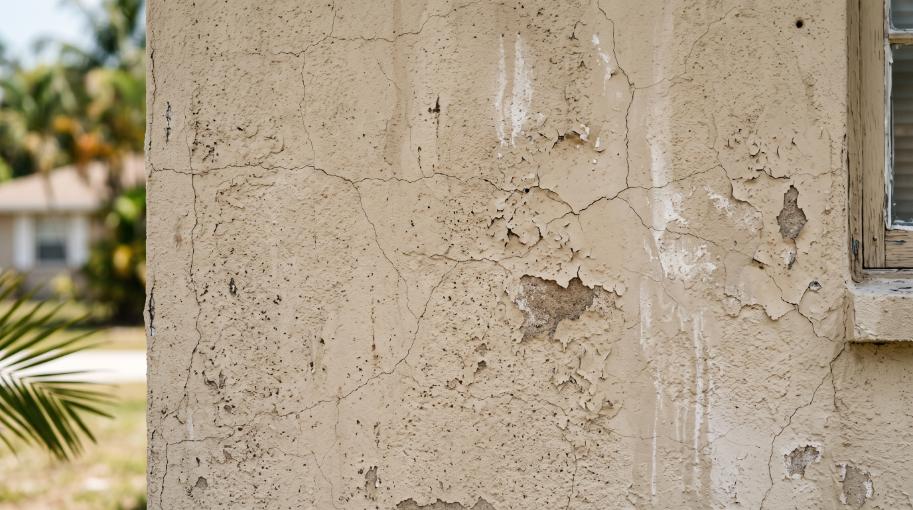
Document every issue you find before starting work. The condition of the stucco determines the repair scope, the products needed and the total cost of the project.
Step 2 — Pressure Wash the Entire Exterior
Once you have assessed the stucco condition, the next step is a thorough pressure wash of the entire exterior. This is not optional, it is essential for paint adhesion.
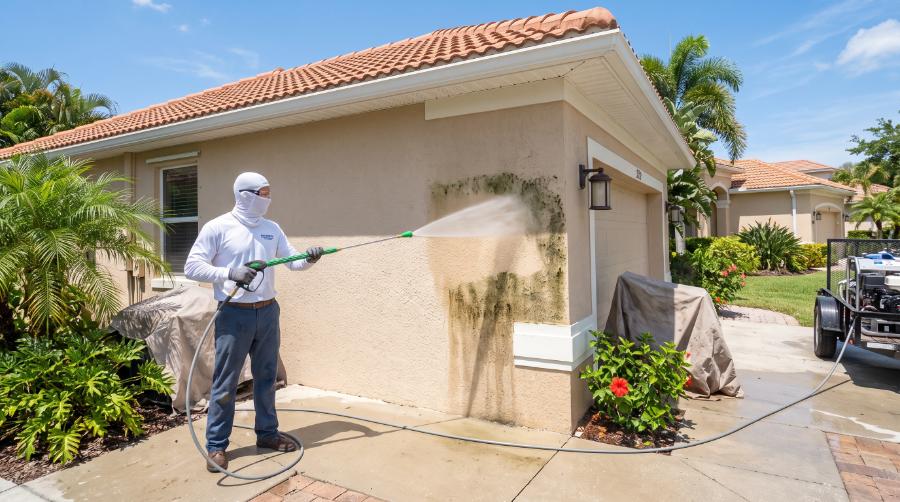
For stucco surfaces, pressure washing removes:
- Dirt, dust and atmospheric contamination that has accumulated on the surface
- Algae, mold and mildew growth
- Chalking from the existing paint, the white powder that forms on aging paint surfaces
- Loose or flaking paint that has already separated from the stucco
- Salt deposits from rain and humidity
Pressure wash stucco at 1,500 to 2,500 PSI — lower than what you would use on concrete. Stucco is softer than concrete and can be damaged by excessive pressure. Use a fan-tip nozzle at 25 to 40 degrees to distribute the force. Keep the nozzle moving, do not focus high pressure on a single spot.
For mold and algae, apply a diluted bleach solution or professional mildewcide before pressure washing and allow it to dwell for 10 to 15 minutes before rinsing. This kills biological growth at the root rather than just removing the surface layer.
After pressure washing, allow the stucco to dry completely, typically 24 to 48 hours in Orlando’s climate before any repair or painting work begins. Painting wet or damp stucco traps moisture in the wall and causes adhesion failure and mold growth behind the paint film.
See our pressure washing services in Orlando if you need professional pressure washing before your painting project.
Step 3: Repair All Cracks and Damaged Areas
This is the step that separates a paint job that lasts from one that fails. Every crack in the stucco must be addressed before any primer or paint is applied. Painting over stucco cracks without repairing them does not hide them permanently — the cracks reappear through the new paint within months as the stucco continues to move.
Hairline Cracks (Under 1/16 Inch)
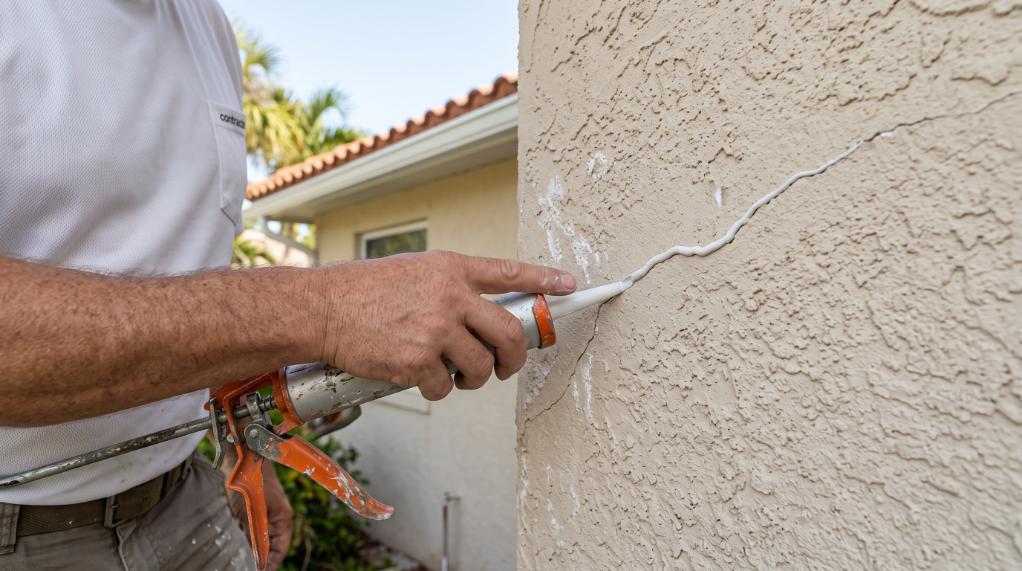
Hairline cracks are the most common type in Florida stucco and are best filled with a high-quality elastomeric caulk or elastomeric crack filler. Elastomeric products remain flexible after curing, allowing them to move with the stucco rather than re-cracking.
Application process for hairline cracks:
- Clean the crack with a wire brush or compressed air to remove loose material
- Apply elastomeric caulk or crack filler with a caulk gun or putty knife
- Tool the filler smooth with a damp finger or putty knife
- Allow to cure fully per manufacturer instructions before priming
- Apply a stucco texture spray or paint-on texture if needed to match surrounding surface
Larger Cracks and Damaged Areas
Cracks wider than 1/16 inch, areas of hollow stucco or sections where the stucco has separated from the substrate require more substantial repair. The damaged stucco must be removed back to solid material and replaced with new stucco patching compound.
For DIY repairs:
- Use a cold chisel and hammer to remove all loose or hollow stucco back to solid material
- Undercut the edges of the repair area so the patch has a mechanical lock
- Dampen the area before applying patch material to prevent rapid moisture absorption
- Apply stucco patching compound in layers – no single layer should exceed 3/8 inch
- Allow each layer to cure and scratch the surface before applying the next
- Texture the final layer to match the surrounding stucco finish
- Allow the patch to cure fully — typically 7 to 14 days — before priming and painting
For significant stucco damage covering large areas or involving structural cracks, professional stucco repair is the right call. Poorly executed stucco patches fail faster than the original surface and create ongoing problems.
Addressing Efflorescence
If you found white mineral deposits on the stucco, these must be treated before painting. Efflorescence indicates moisture migrating through the stucco from inside the wall. Often from poor drainage, leaking gutters or moisture infiltrating from above.
First, address the moisture source. Painting over efflorescence without fixing the cause will result in the deposits pushing back through the new paint within months. Once the moisture source is addressed, remove efflorescence with a stiff brush and a diluted muriatic acid solution (10 parts water to 1 part acid), rinse thoroughly and allow to dry completely before priming.
Step 4: Choose the Right Paint for Florida Stucco
Paint selection is where many Orlando homeowners make the most expensive mistake. Standard exterior latex paint is not the best choice for stucco in Florida’s climate. Here is what to use:
Option A: Elastomeric Paint or Coating (Best for Florida Stucco)
Elastomeric coatings are rubber-based products applied at significantly higher thickness than standard paint, typically 10 to 20 mils compared to 1 to 2 mils for standard paint. This thickness gives them properties that standard paint cannot provide:
- Bridge hairline cracks: The thick film spans small cracks and prevents water infiltration
- Flexibility: Elastomeric coatings stretch and recover as the stucco expands and contracts with temperature changes, rather than cracking with the surface
- Waterproofing: Properly applied elastomeric coating creates a fully waterproof barrier on the stucco surface
- Longevity: Elastomeric coatings on Florida stucco regularly last 10 to 15 years when properly applied
Recommended elastomeric products for Florida stucco: Sherwin-Williams Conflex XL, Sherwin-Williams Loxon XP, Parex USA elastomeric or similar products from major manufacturers. Apply with a thick-nap roller (3/4 inch or 1 inch) to work the material into the texture.
Option B: Premium 100% Acrylic Exterior Paint
If you are not using an elastomeric coating, use a premium 100% acrylic exterior paint rated for masonry surfaces. Products like Sherwin-Williams Duration Exterior, Sherwin-Williams Emerald Exterior or Benjamin Moore Aura Exterior contain higher concentrations of acrylic resin and UV-resistant pigments than standard exterior paint.
On stucco, 100% acrylic paint lasts 7 to 10 years with proper preparation and application. It does not bridge cracks like elastomeric products, but it provides excellent color retention and mildew resistance.
What Not to Use on Florida Stucco
- Standard exterior latex paint: Lower acrylic content means faster UV degradation and less flexibility
- Oil-based paint: Traps moisture in the stucco and causes peeling in Florida’s humid climate
- Interior paint: not formulated for outdoor UV exposure or moisture
- Budget or contractor-grade exterior paint: Shorter lifespan in Florida’s demanding climate
| Product Type | Expected Lifespan (FL) | Best For |
| Elastomeric coating | 10–15 years | Stucco with hairline cracks, best waterproofing |
| Premium 100% acrylic (Duration, Aura) | 7–10 years | Stucco in good condition, color retention priority |
| Standard exterior latex | 4–6 years | Not recommended for Florida stucco |
| Builder-grade paint | 2–3 years | Avoid on stucco in Florida |
Step 5: Apply the Right Primer
Primer on stucco is not optional. The right primer does several things that paint alone cannot:
- Seals the porous stucco surface so paint does not soak in unevenly
- Provides a bonding layer between the stucco and the finish coat
- Blocks stains, efflorescence and tannin bleeding from reaching the finish coat
- Fills micro-pores in the stucco surface for a smoother finish coat
For most Florida stucco applications, use a masonry primer or a high-build primer specifically designed for porous masonry surfaces. Sherwin-Williams Loxon Masonry Primer, Sherwin-Williams PrepRite Masonry Primer or similar products are good choices.
If you are applying an elastomeric coating, use the manufacturer’s recommended primer. Typically a specific masonry primer from the same product line. Mixing primer brands with elastomeric topcoats can affect adhesion and warranty.
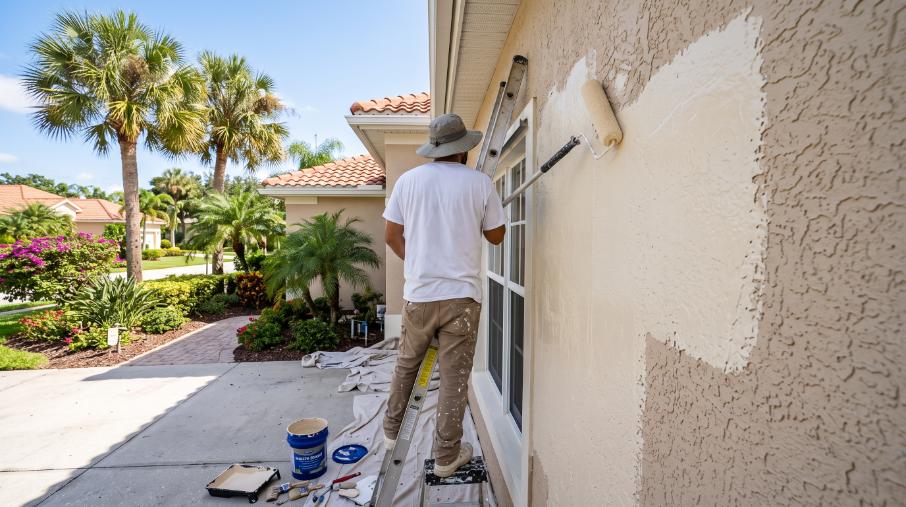
Apply primer with a thick-nap roller (3/4 inch) to push material into the stucco texture. Cut in edges with a brush. Allow primer to dry fully per manufacturer instructions before applying finish coats.
Step 6: Choose the Right Time to Paint
Timing is a significant factor in how long exterior paint lasts on Florida stucco. Orlando’s climate creates specific windows that are better for painting than others.
Best Season: October Through May
The optimal window for exterior painting in Orlando is October through May — before the rainy season and during the period when humidity is lower and temperatures are more moderate. Paint cures more consistently and adheres better in lower humidity conditions.
Time of Day
Paint stucco in the morning after any overnight dew has dried from the surface. Avoid painting in direct midday sun when surface temperatures exceed 90 degrees Fahrenheit, paint dries too quickly and does not bond properly. Aim for surface temperatures between 50 and 85 degrees for best results.
Weather Conditions to Avoid
- Rain is forecast within 24 hours — paint needs time to cure before rain exposure
- Relative humidity above 85 percent — paint will not dry or cure correctly
- Surface temperature below 50 degrees Fahrenheit — paint does not flow or bond properly
- Wind speeds above 15 mph — paint dries too fast and may show stippling or dry spray
Step 7: Application — How to Paint Stucco Correctly
Stucco texture makes application different from painting flat surfaces. The goal is to get paint fully into all the recesses of the texture while maintaining a consistent film thickness across the surface.
Tools for Painting Stucco
- Thick-nap roller (3/4 inch to 1 inch nap) — the most important tool for stucco. The thick nap reaches into texture recesses that a thin-nap roller would skip, leaving unpainted areas.
- Natural or polyester bristle brush for cut-in work at edges, corners and around trim
- Extension pole for roller — allows you to maintain consistent pressure and reach higher areas without a ladder for most single-story homes
- Airless sprayer (optional) — experienced painters can spray elastomeric products effectively, but spraying requires back-rolling immediately to push material into the texture. Not recommended for DIY on stucco.
Application Process
- Cut in all edges, corners, trim lines and areas around windows and doors with a brush first
- Load the roller thoroughly — stucco absorbs more paint than smooth surfaces. Do not work from a dry roller.
- Apply with slow, deliberate strokes working the paint into the texture. Do not roll too fast.
- Use a W or M pattern to distribute paint evenly before back-rolling in a consistent direction
- Maintain a wet edge — do not allow partially dried paint areas to overlap with new paint. Work section by section.
- Allow first coat to dry completely per manufacturer instructions — typically 4 to 6 hours minimum in Orlando’s humidity
- Apply second coat using the same technique. Two coats are the minimum for any exterior stucco application.
- For elastomeric coatings, apply at the rate specified on the product label — elastomeric products are designed to be applied thicker than standard paint
Plan on using significantly more paint than you would on a smooth surface. Stucco texture increases coverage requirements by 20 to 40 percent compared to flat surfaces. A standard 1,500 square foot home exterior may require 15 to 25 gallons of paint depending on texture depth.
| Need Your Stucco Home Painted in Orlando? Philip White Painting and Restoration LLC has been painting and repairing stucco homes throughout Orlando, FL since 1989. We handle crack assessment, repair, priming and painting as a complete service with free in-person estimates and no obligation. Call (407) 860-5846 Free Estimate | philipwhitepainting.com/free estimate/ |
Common Stucco Painting Mistakes in Florida And How to Avoid Them
| Mistake | Why It Happens and How to Avoid It |
| Painting over cracks without repairing them | Cracks appear to disappear under fresh paint but reappear within months as the stucco moves. Always fill and repair every crack before primer or paint. |
| Using standard exterior latex instead of elastomeric | Standard latex cannot flex with Florida stucco movement and cracks within 3 to 5 years. Use elastomeric coatings or premium 100% acrylic for better lifespan. |
| Skipping primer on stucco | Unprimred stucco absorbs paint unevenly, leaving thin spots and poor adhesion. Always prime bare or repainted stucco before finish coats. |
| Painting wet or damp stucco | Moisture trapped under the paint film causes blistering, peeling and mold. Always allow 24 to 48 hours drying after pressure washing. |
| Using a thin-nap roller | Thin rollers skip the recesses in stucco texture, leaving unpainted areas. Always use 3/4 inch or 1 inch nap on stucco. |
| Painting in midday heat or high humidity | Paint dries too fast in extreme heat or does not cure correctly in high humidity. Paint in the morning, October through May when possible. |
| Applying single coat only | One coat of paint on stucco is never sufficient. Two coats minimum — three for elastomeric applications or dramatic color changes. |
DIY vs Professional Stucco Painting in Orlando Honest Assessment
When DIY Makes Sense
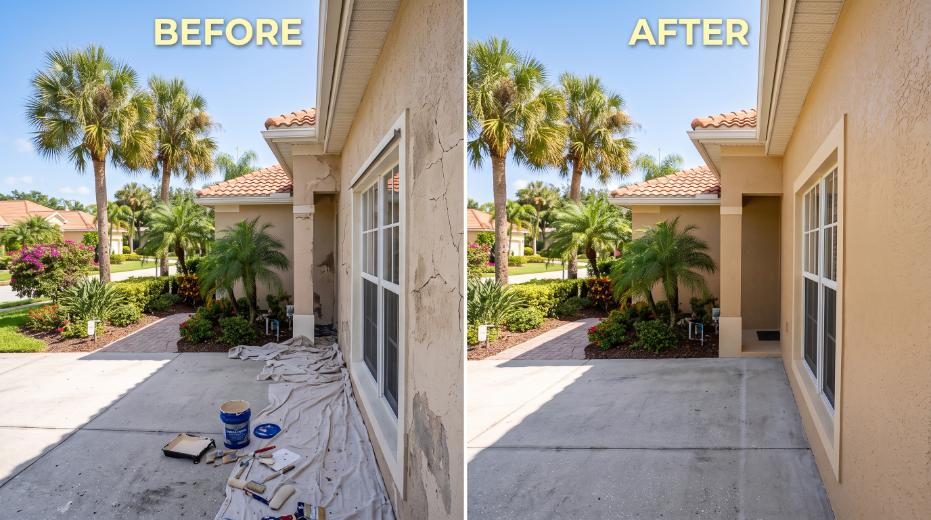
DIY stucco painting can produce acceptable results for a homeowner who is comfortable with the preparation process, has time to do the work correctly and is working on a home with stucco in good condition with minimal cracking. The material cost for a standard Orlando home runs $800 to $1,500 for paint, primer and supplies. The time investment is typically 3 to 5 full days of work.
Where Professional Painting Is Worth It
For most Orlando homeowners, the combination of proper stucco assessment, crack repair, preparation, product selection and application technique makes professional stucco painting the better value. The most common DIY stucco painting outcomes we see are inadequate crack repair, wrong paint product selection and thin coverage that fails early. All of which result in repainting sooner than a properly done professional job would require.
If your stucco has significant cracking, hollow areas or efflorescence, professional assessment and repair is strongly recommended before any painting. These issues require specific expertise to address correctly. Our exterior painting services in Orlando include stucco assessment, crack repair and painting as a complete service.
How Much Does It Cost to Paint a Stucco Home in Orlando?
Professional stucco painting in Orlando typically costs:
- Small stucco home (under 1,500 sq ft): $1,200 to $2,500
- Medium stucco home (1,500 to 2,500 sq ft): $2,000 to $4,000
- Large stucco home (2,500 to 3,500 sq ft): $3,500 to $6,000
- Extra large or two-story (3,500+ sq ft): $5,000 to $9,000+
These ranges include pressure washing, crack repair, primer and two coats of paint or elastomeric coating. Significant stucco damage requiring extensive patching is priced separately. For a detailed cost breakdown, see our exterior painting cost guide for Orlando.
Frequently Asked Questions Painting Stucco Homes in Orlando
Can you paint directly over old stucco paint in Orlando?
Yes, in most cases but only after proper preparation. The existing paint must be sound, meaning it is not peeling, flaking or chalking excessively. All cracks must be repaired. The surface must be pressure washed and fully dry. If the existing paint is in poor condition or an incompatible type (such as oil-based paint), it may need to be stripped or a specific bonding primer used before repainting.
How long does stucco paint last in Florida?
With elastomeric coatings and proper preparation, stucco paint in Florida lasts 10 to 15 years. With premium 100% acrylic paint, expect 7 to 10 years. Standard exterior latex on Florida stucco typically lasts 4 to 6 years. Builder-grade paint may show deterioration within 2 to 3 years. Proper crack repair and priming are as important as paint quality in determining lifespan.
Do stucco cracks need to be repaired before painting?
Yes, always. Painting over stucco cracks without repairing them does not seal the crack permanently. The crack continues to move with the stucco and appears through the new paint within months. Hairline cracks should be filled with elastomeric caulk. Larger cracks require proper stucco patching compound. Structural cracks should be assessed by a professional before any painting begins.
What is the best paint for stucco in Florida?
For Florida stucco, elastomeric coatings provide the best combination of crack-bridging, waterproofing and longevity, particularly for homes with hairline cracking. Sherwin-Williams Conflex XL, Sherwin-Williams Loxon XP, and Parex USA elastomeric products are good choices. If using standard paint, Sherwin-Williams Duration Exterior or Benjamin Moore Aura Exterior are the best premium 100% acrylic options for Florida’s UV and humidity conditions.
How do you prep stucco for painting in Florida?
The preparation process for stucco in Florida includes: inspect for cracks, hollow areas, efflorescence and mold; repair all cracks with elastomeric caulk or stucco patching compound; treat mold and mildew with a diluted bleach solution; pressure wash at 1,500 to 2,500 PSI; allow 24 to 48 hours to dry; apply masonry primer; then apply two coats of elastomeric coating or premium 100% acrylic exterior paint.
Can you use a roller to paint stucco?
Yes and a roller is the preferred tool for painting stucco surfaces. Use a thick-nap roller with 3/4 inch or 1 inch nap to reach into the recesses of the texture. A thin-nap roller will skip the texture and leave unpainted areas. Apply with slow, deliberate strokes and load the roller generously — stucco absorbs significantly more paint than smooth surfaces.
How do I get a free estimate for stucco painting in Orlando?
Call Philip White Painting and Restoration LLC at (407) 860-5846 or visit philipwhitepainting.com/exterior-painting/ to request a free in-person estimate. We inspect your stucco condition, identify any repair work needed and provide a detailed written estimate. We serve Orlando, Kissimmee, Winter Park, Oviedo, Altamonte Springs and all of Central Florida.
The Bottom Line
Painting a stucco home in Orlando requires more preparation and more attention to product selection than painting most other exterior surfaces. The steps are not complicated, but skipping any of them — crack repair, proper primer, correct paint product, adequate drying time, leads to early paint failure in Florida’s demanding climate.
Done correctly, a professional stucco paint job using elastomeric coatings and proper preparation lasts 10 to 15 years in Central Florida. Done incorrectly, it may need to be redone within 2 to 3 years.
If you are planning to paint your stucco home in Orlando and want it done right the first time, call Philip White Painting and Restoration LLC at (407) 860-5846. We have been painting stucco homes throughout Central Florida since 1989 and provide free in-person estimates with no pressure and no obligation.
